Key Takeaways
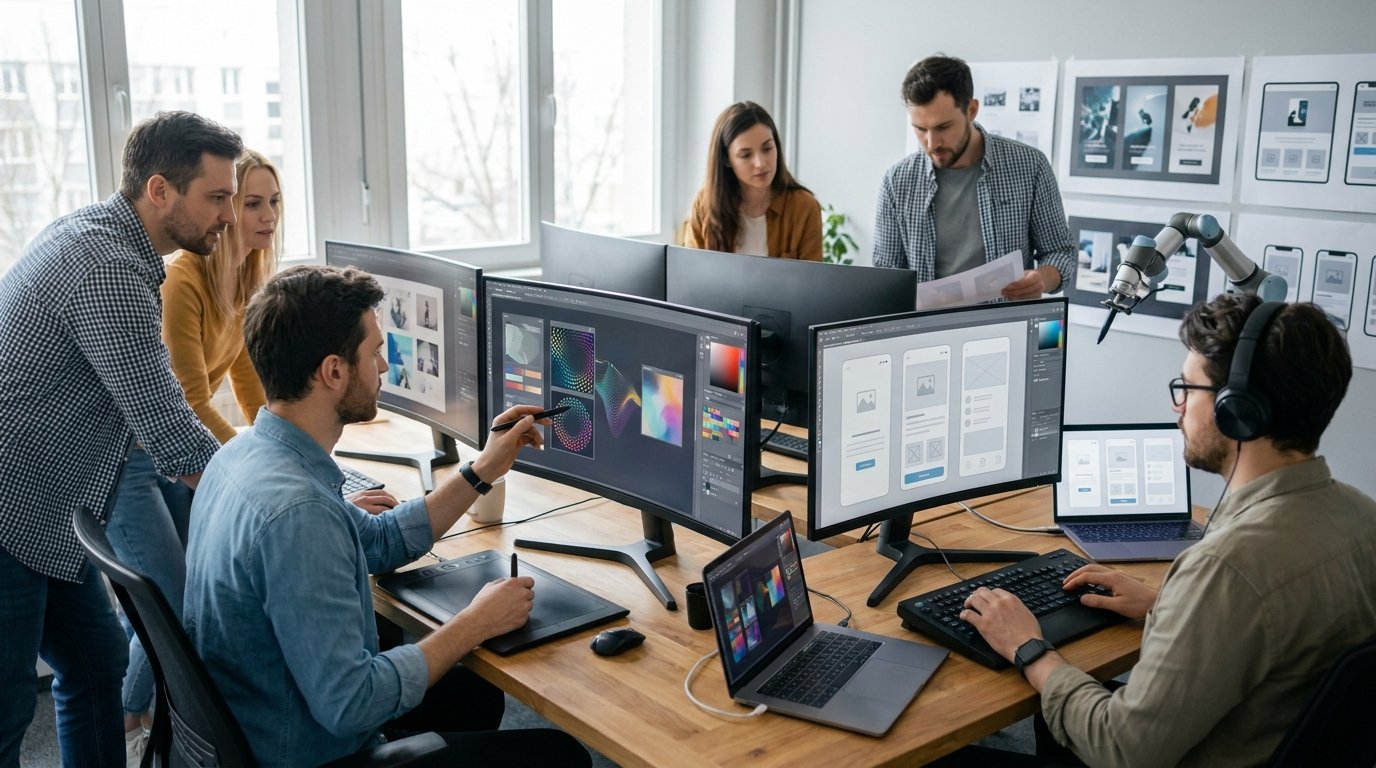
- AI is revolutionising creative design in Australia by offering tools that enhance productivity and foster creativity.
- In graphic design, AI automates repetitive tasks and provides data-driven trend predictions.
- User Experience design benefits from AI through personalised and predictive interface adjustments.
- AI in advertising allows for more targeted and personalised marketing campaigns.
Key Answer
AI is reshaping creative design by offering tools that enhance productivity and foster creativity, particularly in graphic design, UX, and advertising, making it an indispensable asset in Australia’s design landscape.
Artificial Intelligence (AI) is undeniably revolutionising the creative design industry, offering a plethora of innovative tools and techniques that significantly enhance productivity and creativity. In Australia, a country known for its vibrant creative sector, designers are increasingly adopting AI to remain competitive and meet the evolving demands of the market. This transformation is not just a trend but a pivotal shift in how creative processes are approached, especially in fields like graphic design, user experience (UX), and advertising.
The New Wave: AI in Graphic Design
In the realm of graphic design, AI tools are becoming indispensable. They enable designers to streamline repetitive tasks such as resizing images and generating colour palettes, allowing them to focus on more creative aspects of their projects. For instance, platforms like Canva, widely used in Australia, utilise AI to offer smart layout suggestions and automatic image enhancements.
Moreover, AI-driven design software can analyse large datasets to predict design trends, ensuring that designers stay ahead of the curve. This analytical capability provides insights that were previously difficult to obtain, offering a competitive edge in a rapidly evolving field.
| AI Tool | Functionality | Benefit |
|---|---|---|
| Canva | Smart layout suggestions, image enhancements | Streamlines design process |
| Adobe Sensei | AI-driven image editing | Improves efficiency |
| Deep Art Effects | Style transformation | Expands creative possibilities |
Enhancing User Experience (UX) with AI
User Experience (UX) design is another area where AI is making a significant impact. AI tools can analyse user data to personalise website interfaces, improving user engagement and satisfaction. In Australia, companies are leveraging AI to create more intuitive and responsive digital environments.
AI also plays a crucial role in predictive user behaviour analysis. By interpreting patterns in user interactions, designers can anticipate user needs and tailor experiences that are both seamless and impactful. This level of personalisation is increasingly expected by users and is facilitated by sophisticated AI algorithms.
Expert Perspective
AI and Design Innovation Specialist
The integration of AI in creative design marks a pivotal shift in the industry, especially in Australia. As AI tools become more sophisticated, designers will not only improve efficiency but also expand their creative horizons. It’s crucial for designers to embrace this technology while maintaining ethical standards and valuing human creativity.
AI's Role in Advertising: Beyond the Traditional
In advertising, AI is pushing the boundaries of creativity by enabling more targeted and efficient campaigns. It allows advertisers to analyse consumer behaviour at an unprecedented scale, thereby delivering highly personalised ad content. This is particularly beneficial in Australia’s diverse market, where targeted marketing strategies are crucial.
AI tools like IBM Watson and Google AI are used to craft adverts that resonate more deeply with audiences by understanding sentiment and context. This capability not only enhances the effectiveness of campaigns but also provides insights that inform future advertising strategies.
Challenges in Adopting AI in Creative Design
Despite its numerous advantages, the integration of AI in creative design comes with challenges. Many designers express concerns about the potential loss of creativity, fearing that AI might overshadow human intuition and originality. There is also the issue of accessibility, as not all creative professionals have the resources to invest in high-end AI tools.
Furthermore, there are ethical considerations regarding AI’s ability to replicate human styles or designs without proper attribution. As AI becomes more prevalent, these concerns will need to be addressed through thoughtful regulation and industry standards.
Why AI is the Future of Creative Design in Australia
Australia’s creative industry is set to benefit tremendously from AI advancements. By automating mundane tasks, AI frees up time for designers to innovate and focus on developing unique ideas. The ability of AI to process vast amounts of data also means that insights can be drawn quickly, keeping Australian designers at the forefront of global trends.
Moreover, as AI technology becomes more accessible, it is likely to democratise the design process, enabling independent designers and small firms to compete on a level playing field with larger organisations. The future of design in Australia, thus, hinges on how effectively AI is integrated into the creative workflows.
Frequently Asked Questions
AI enhances graphic design by automating repetitive tasks and providing data-driven insights, allowing designers to focus on creative elements.
Designers face challenges such as potential creativity loss, resource accessibility, and ethical concerns related to AI-generated content.
AI in advertising analyses consumer behaviour for targeted campaigns and creates personalised ad content using data insights.
AI is vital for automating tasks, providing quick insights from data, and keeping Australian designers competitive globally.
While AI enhances efficiency and creativity, it cannot replace the unique human intuition and creativity essential in design.