Key Takeaways
- AI tools enhance creativity and streamline design workflows.
- Integration of AI requires balancing technology with human intuition.
- Legal considerations are crucial for ethical AI design practices.
Key Answer
Discover how to use AI for designing to streamline workflows, enhance creativity, and integrate cutting-edge tools in graphic and product design.
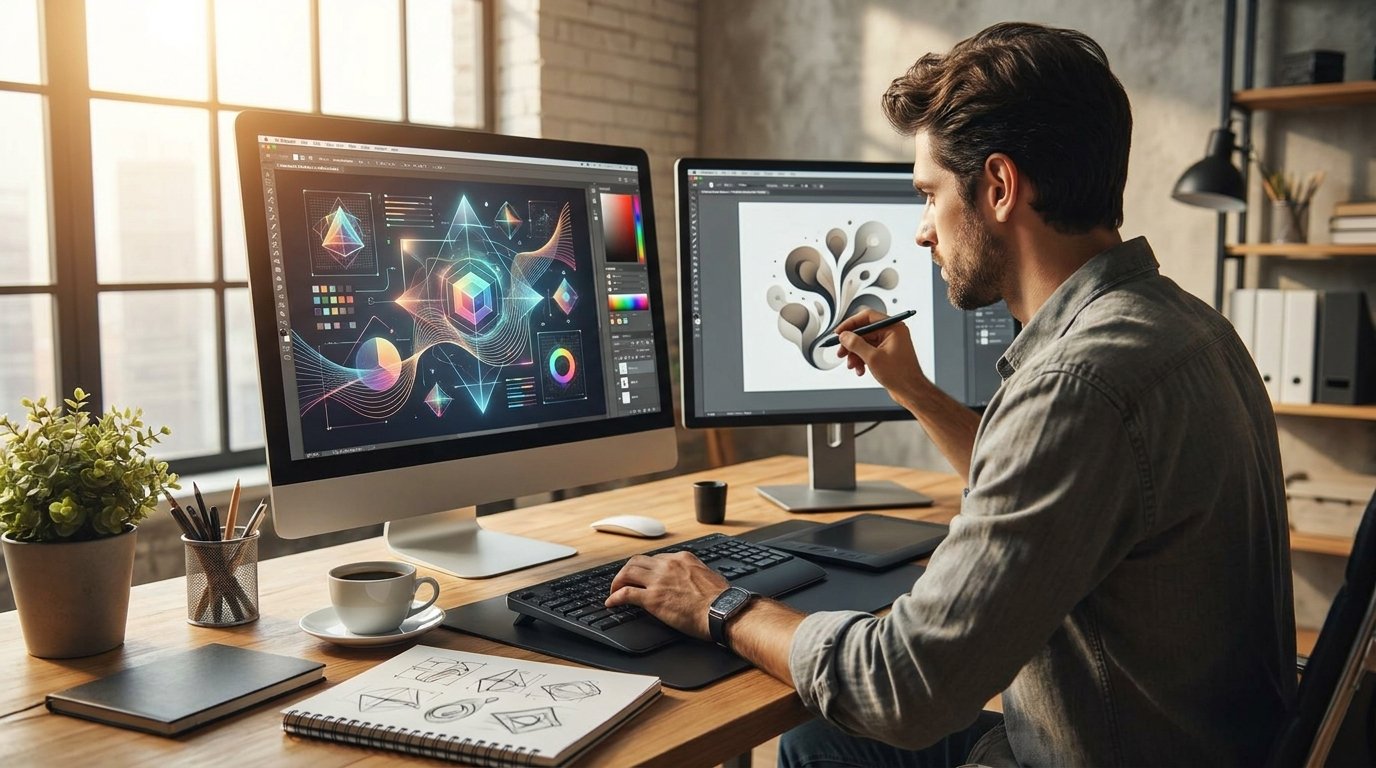
In today’s fast-paced digital world, AI has revolutionised various industries, and design is no exception. Understanding how to use AI for designing can significantly enhance creativity and efficiency, providing designers with innovative tools and streamlined workflows. Whether in graphic design, product development, or creating complex design systems, AI offers unique capabilities that empower designers to push the boundaries of creativity and efficiency.
Unlocking AI's Creative Potential
AI’s integration into the design process opens new avenues for creativity by automating routine tasks and providing fresh perspectives. Tools like Midjourney and Canva’s Magic Design™ allow designers to focus on strategic creativity rather than mundane execution. By leveraging AI, designers can explore a wider array of styles and techniques, pushing the boundaries of traditional design.
AI in Design tools provide capabilities that were once considered futuristic, enabling designers to automate repetitive tasks, thus freeing up time for more complex creative processes. This technological aid extends beyond mere efficiency, contributing to the ideation phase by offering diverse design suggestions based on AI algorithms. The use of AI not only enhances productivity but also enriches the creative output of design projects.
AI Tools Revolutionising Design
Several AI tools have become pivotal in transforming the design landscape. Platforms such as Canva’s Magic Design™ and Figma’s AI Design Generator are excellent examples of how AI is making professional design accessible to both novices and seasoned experts. These tools provide features such as automated layout suggestions, colour palette generation, and component libraries that enhance the design workflow.
In product design, AI assists in prototyping by simulating different scenarios and user interactions, providing insights that would traditionally require extensive testing. AI-driven platforms are increasingly being adopted in the field to predict user experience trends, ensuring designs are not only aesthetically pleasing but also functional and user-friendly. The synthesis of design and AI in tools like DesignsAI enables the creation of complex design systems that can adapt to various user needs, improving overall design quality and efficiency.
Expert Perspective
AI Design Expert
In the rapidly evolving world of design, AI stands out as a transformative force, offering tools that not only enhance efficiency but also expand creative possibilities. As an expert in this field, it is clear that AI’s role is not to overshadow human creativity but to augment it, allowing designers to explore new frontiers while maintaining artistic control.
Integrating AI into Your Design Workflow
Integrating AI into the design workflow requires a strategic approach, focusing on harmonising human creativity with machine efficiency. Begin by identifying repetitive tasks that can be automated, freeing up time for more creative endeavors. Tools like Craft.ai can assist in creating workflow templates, ensuring consistent project management across teams.
Designers should also consider how AI can influence the early stages of design, such as user research and persona development. AI tools are capable of analysing user data to produce detailed insights, enabling a more targeted design approach. For graphic design, using AI to generate initial drafts can serve as a foundation for more intricate, manual refinements. This approach is not only efficient but also allows designers to maintain a high level of creative control.
According to Logan Nathan’s AI Policy, the key lies in leveraging AI to enhance, not replace, human intuition. By implementing AI effectively, designers can achieve a more robust, dynamic workflow that leverages technology to boost innovation and creative expression.
Navigating the Legalities of AI Design
As AI becomes more prevalent in design, understanding the legal landscape is crucial. Issues such as copyright and intellectual property rights can become complex when AI-generated content is involved. It is essential for designers to stay informed about current laws and guidelines to ensure compliance and protect their creative outputs.
The Australian Privacy Act and relevant regulations, such as the Notifiable Data Breaches scheme, set expectations for how personal information should be managed within AI-driven environments. Designers must consider these legalities when incorporating AI into their workflows, ensuring that all user data is handled ethically and responsibly.
For those involved in AI education and design, it’s crucial to foster a responsible use of AI, as highlighted in the Early AI Education initiatives. Promoting a culture of awareness around AI’s potential and its legal implications is vital for maintaining ethical standards and ensuring the integrity of design practices.
Future Trends in AI-Driven Design Systems
AI-driven design systems are at the forefront of innovation, offering scalable solutions for complex design challenges. These systems are designed to adapt and evolve, integrating seamlessly with existing workflows while introducing new levels of automation and efficiency.
The future of AI in design is marked by its ability to create adaptive and intelligent design frameworks that learn and grow with user interactions. Such systems have the potential to redefine design standards, allowing for more personalised and user-centric creations. According to industry experts, the integration of AI within design not only streamlines processes but also inspires new creative potentials by exploring uncharted design territories.
AI-driven systems are essential in fostering innovation and adaptability, as evidenced by the successful adoption of these technologies by forward-thinking businesses. This trend indicates a promising future for AI’s role in design, offering new opportunities for designers to innovate and create impactful experiences.
Frequently Asked Questions
Some of the best AI tools for designing include Figma’s AI Design Generator, Canva’s Magic Design™, and DesignsAI, which offer features like automated layout suggestions and prototyping capabilities.
AI is designed to enhance, not replace, human designers. It assists with routine tasks and provides creative insights, allowing designers to focus on more complex, strategic work.
AI improves design workflows by automating repetitive tasks, generating design variations, and providing data-driven insights for better decision-making.
Designers should be aware of copyright issues and the management of personal data, adhering to regulations like the Australian Privacy Act when using AI-generated content.
AI tools assist in product design by simulating user interactions and providing predictive insights into user experience trends, ensuring designs are both functional and user-friendly.