
Key Takeaways
Forward Deployed Engineers play a crucial role in client engagement and custom solution delivery.
Traditional Software Engineers focus on system efficiency and code quality.
The demand for FDEs is rising in Australia, especially in fintech and healthcare technology.
Transitioning to a forward-deployed role requires enhanced communication and problem-solving skills.
Key Answer
Forward Deployed Engineers (FDEs) work closely with clients to tailor tech solutions on-site, while traditional Software Engineers (SWEs) focus on developing robust code frameworks. This differentiation highlights a growing shift in Australia’s tech industry towards client-centric solutions.
In the ever-evolving tech industry, understanding the nuances between different engineering roles is crucial. One such distinction gaining attention in Australia is between Forward Deployed Engineers (FDEs) and traditional Software Engineers (SWEs). Each plays a vital role in product development and customer satisfaction, yet their approaches and responsibilities can be quite distinct. This analysis explores these differences and the growing trend towards forward deployment within Australian tech organisations.
Role Definitions: What Sets FDEs and SWEs Apart?
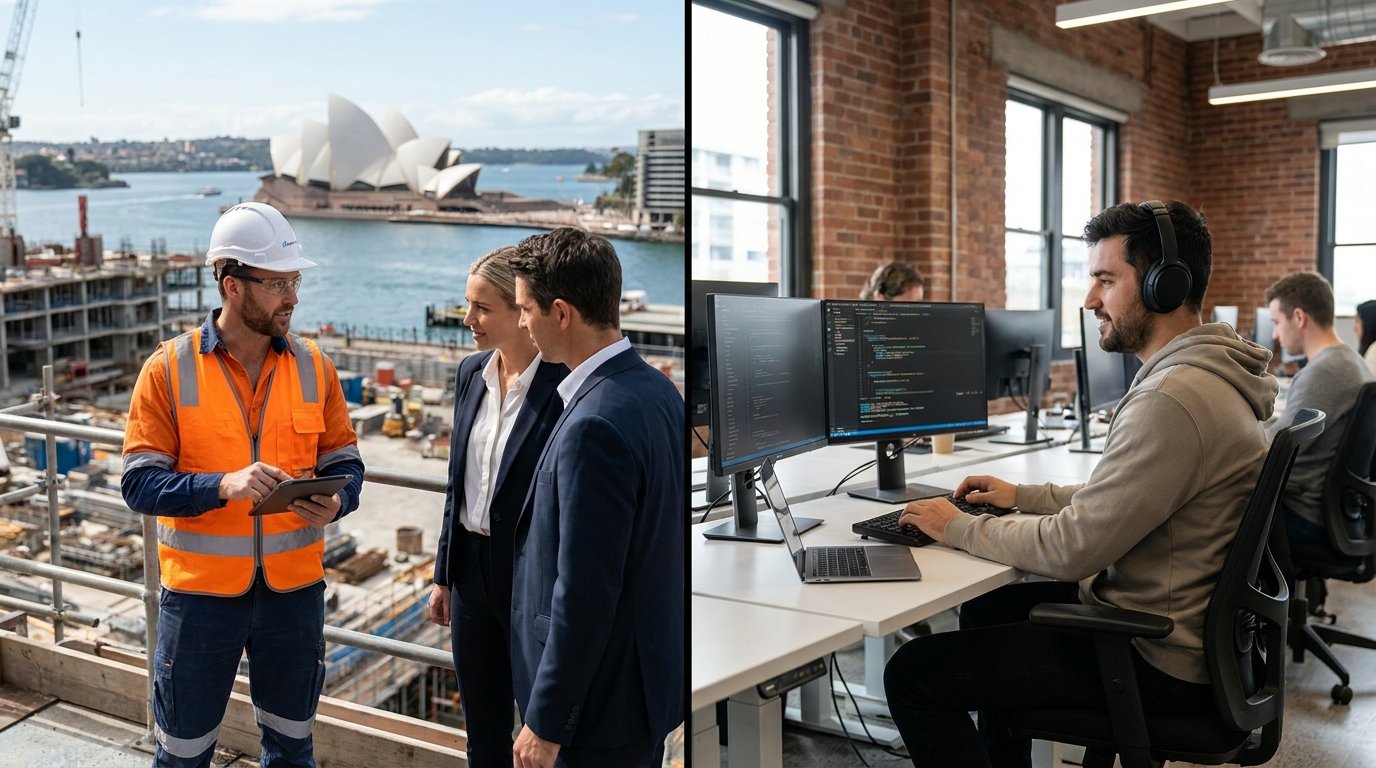
Forward Deployed Engineers (FDEs) are essentially the bridge between the technical team and clients. They work on-site with customers, understanding unique needs and customising solutions accordingly. In contrast, traditional Software Engineers (SWEs) are primarily focused on the internal development of software products, ensuring code quality and system efficiency.
The primary difference lies in their work environments. FDEs are often found in client offices or field locations, actively engaging with users. They prioritise responsiveness and adaptability to solve real-world problems quickly. Meanwhile, SWEs work in development hubs or remote settings where they concentrate on coding, debugging, and optimising system architectures.
Technical Skills Matrix: FDEs vs SWEs
Understanding the technical skill sets required for FDEs versus SWEs is crucial for both recruitment and project success. FDEs typically require a broad set of skills that include domain knowledge, problem-solving capabilities, and excellent communication skills. They must be adept in using ETL tools, API aggregators, and deployment scripts to deploy solutions effectively.
Conversely, SWEs focus on deep technical skills related to distributed systems, core framework development, and compiler optimisation. Their expertise lies in writing scalable code and ensuring the software’s robustness and efficiency, often leveraging advanced programming languages and software development frameworks.
Skill Set | Forward Deployed Engineers | Traditional Software Engineers |
|---|---|---|
Domain Knowledge | High | Medium |
Problem-Solving | High | Medium |
Communication Skills | High | Medium |
ETL Tools & API Aggregation | Required | Optional |
Distributed Systems | Optional | Required |
Compiler Optimisation | Optional | Required |
Expert Perspective
Tech Industry Analyst
As an industry observer, it’s clear that the rise of Forward Deployed Engineers marks a significant shift towards customer-centric engineering solutions in Australia. This change necessitates a broader skill set for engineers and reflects a global trend of integrating technical expertise with client-facing responsibilities.
The Day-to-Day: A Comparative Timeline
A typical day for FDEs and SWEs can appear drastically different due to their unique roles. FDEs might start their day by travelling to a client site in Sydney, meeting with client teams to gather requirements, and then customising software solutions on-site. Their day is client-driven and can involve a lot of travel, making adaptability a key trait.
SWEs, on the other hand, would typically begin their day by reviewing the previous day’s code, attending stand-up meetings, and continuing with their development tasks. Their focus is on long-term project milestones and code quality assurance, often communicating within internal teams through digital platforms to ensure synchronised progress.
The Growing Trend of Forward Deployment in Australia
Australia’s tech industry is witnessing a marked increase in the demand for Forward Deployed Engineers. This trend is largely driven by the need for businesses to deliver tailored, client-specific solutions swiftly and efficiently. Australian tech firms are increasingly recognising the value of FDEs in ensuring customer satisfaction and enhancing product relevance.
This shift not only influences hiring practices but also impacts organisational structure. Companies are restructuring teams to include more FDEs who can leverage their on-site presence to deliver immediate solutions and feedback. The growth in this role aligns with the Australian market’s emphasis on agility and client engagement, particularly in sectors such as fintech and healthcare technology.
Transitioning from SWE to FDE: A Roadmap
Engineers aspiring to transition from a traditional software role to a forward-deployed position must be prepared for a significant change in focus. The transition requires engineers to enhance their client-facing skills, develop a broader business acumen, and adopt a more flexible approach to problem-solving.
It’s beneficial to pursue additional training in business communication and domain-specific knowledge. Engaging in projects that require interaction with end-users can also provide valuable experience. Organisations can facilitate this transition by offering cross-functional training programs, encouraging SWEs to expand their skill sets and prepare for more dynamic roles.
Mental Health and Burnout Considerations
The demands on FDEs and SWEs also vary significantly when it comes to mental health and burnout. FDEs may face stress due to constant travel and the pressure of meeting client expectations on-site. In contrast, SWEs might experience burnout from extended coding sessions and managing technical debt.
It’s crucial for tech organisations to address these issues proactively. Implementing robust support systems and promoting a healthy work-life balance are essential strategies. Providing mental health resources and encouraging regular breaks can help maintain productivity and job satisfaction across both roles.
The 'Hidden' Hybrid Role: Product Engineers
In some Australian startups, the line between FDEs and SWEs blurs, leading to the emergence of ‘Product Engineers’. These engineers are responsible for both client engagement and the technical development of products. This hybrid role demands a combination of skills from both FDEs and SWEs, making it particularly valuable in dynamic startup environments.
For those interested in hybrid roles, it may be beneficial to gain experience in both client-facing and back-end development tasks. This approach not only enhances career flexibility but also ensures that engineers can effectively bridge the gap between technical development and client needs.
Frequently Asked Questions
A Forward Deployed Engineer is a tech professional who works closely with clients, often on-site, to tailor and implement software solutions that meet specific customer needs.
A Software Engineer typically focuses on the internal development of software, ensuring system efficiency and code quality, while a Forward Deployed Engineer engages directly with clients to customise solutions.
Key skills include enhanced communication abilities, a broader understanding of business contexts, and experience in client-facing roles. Additional training in domain-specific knowledge can also be beneficial.
The increase in demand is driven by the need for agile, client-centric solutions in industries like fintech and healthcare technology, where rapid adaptation to customer needs is critical.
A Product Engineer is a hybrid role in startups, combining elements of both Forward Deployed and traditional Software Engineering, focusing on client engagement and technical product development.