
Key Takeaways
The shift from knowledge accumulation to contextual understanding is reshaping educational methodologies in Australia.
Context-driven learning emphasises critical thinking and real-world applications of knowledge.
Innovative teaching strategies like project-based learning are being adopted in Australian schools.
Successful implementation of context-driven learning requires comprehensive curricular changes and professional development for educators.
Key Answer
‘Knowledge Is No Longer Power. Context Is.’ underscores a transformative shift in education, prioritising contextual understanding over mere memorisation, significantly impacting teaching methodologies in Australian schools.
In the ever-evolving landscape of education, the adage ‘Knowledge Is No Longer Power. Context Is.’ has taken centre stage. As educators in Australia grapple with the challenges of preparing students for a complex world, the emphasis has shifted from rote memorisation to contextual understanding. This transformation is not merely a trend but a fundamental shift in how educational institutions approach learning and teaching.
The Shift from Knowledge to Context
The traditional model of education, heavily reliant on the accumulation of facts, is undergoing a profound change. This evolution stems from recognising that information, while abundant, is less impactful without proper context. In Australian schools, there is a growing emphasis on helping students connect the dots between facts and their real-world applications. This shift is driven by the need to equip learners with the skills necessary to navigate an increasingly interconnected and dynamic global environment.
Understanding context means developing the ability to apply knowledge to various situations, which in turn fosters critical thinking and problem-solving skills. For instance, Australian students are now encouraged to engage with content in ways that reflect its relevance to their lives and future careers. This approach not only enriches their learning experience but also prepares them for the complexities of contemporary societal challenges.
Contextual Learning in Practice
The implementation of context-driven learning methodologies requires a fundamental overhaul of curricula. In Australia, educators are integrating interdisciplinary approaches that allow students to explore topics from multiple perspectives. For example, a unit on environmental science might include lessons in economics, history, and ethical considerations, providing a comprehensive understanding of the subject matter.
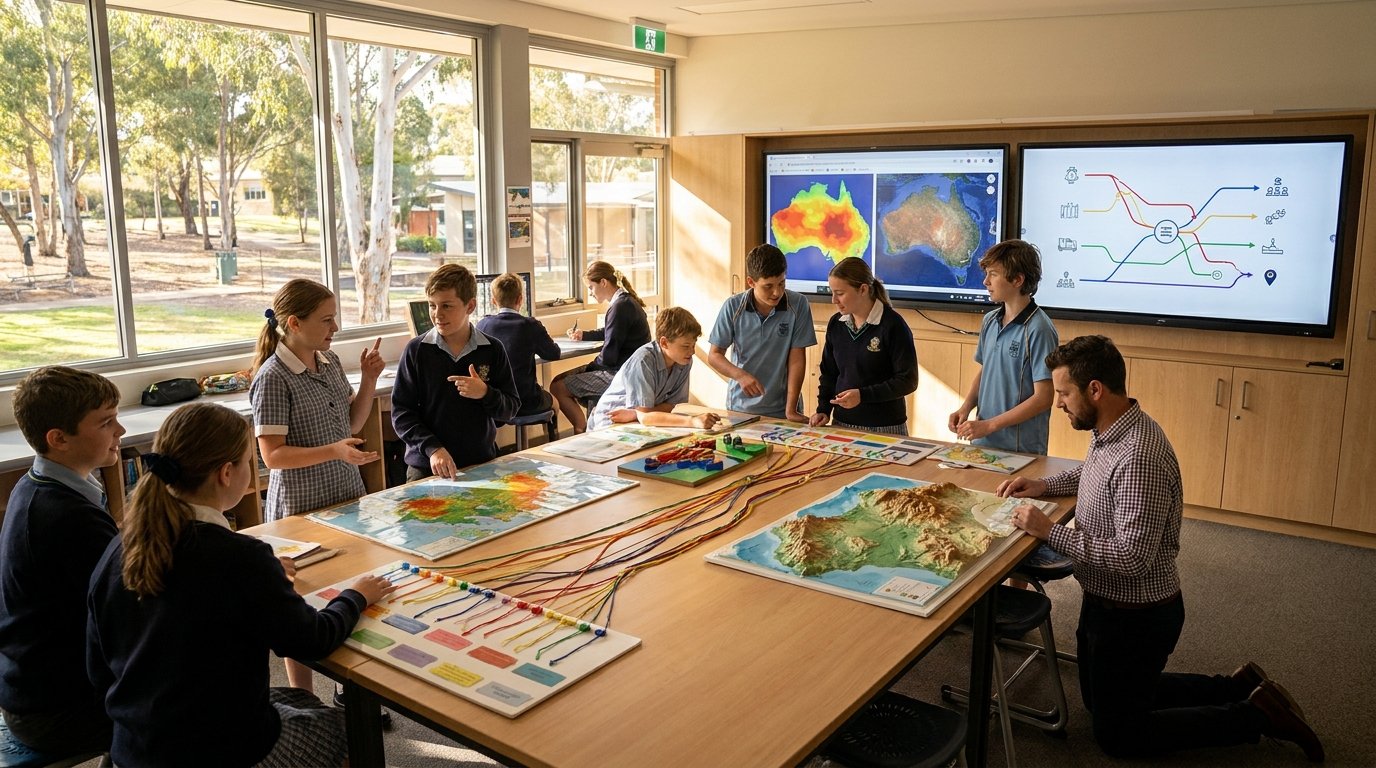
Innovative teaching strategies, such as project-based learning, have also gained traction. These strategies involve students working on real-world projects that require them to apply what they’ve learned in class to solve actual problems. This hands-on approach not only reinforces theoretical knowledge but also enhances students’ engagement and retention of material.
Expert Perspective
Educational Consultant
The transition to context-driven learning is not just a pedagogical trend but a necessary evolution in education. By focusing on real-world applications, Australian schools are not only enhancing academic outcomes but also preparing students for an unpredictable future.
Adapting Curricula for Contextual Understanding
Adapting educational curricula to emphasise context over content is a complex process that involves restructuring traditional lesson plans and assessment methods. Australian educational institutions are increasingly focusing on developing curricula that encourage students to draw connections between different subjects and real-life scenarios.
One successful example is the introduction of integrated STEM (Science, Technology, Engineering, and Mathematics) programs, which encourage students to apply scientific and mathematical concepts in technology and engineering projects. This interdisciplinary approach not only makes learning more relevant but also fosters creativity and innovation among students.
Traditional Curriculum | Contextual Curriculum |
|---|---|
Fact Memorisation | Interdisciplinary Connections |
Standard Exams | Project-Based Assessments |
Subject Silos | Integrated Learning |
Expert Insights on Contextual Learning
Educational experts in Australia emphasise the importance of creating learning environments that facilitate contextual understanding. According to Dr. Jane Fletcher, an education consultant, “The shift towards contextual learning is essential in developing students’ ability to think critically and adapt to new situations.”
Experts highlight that the success of this approach depends on the ability of educators to design curricula that are flexible and responsive to the changing needs of society. Furthermore, ongoing professional development for teachers is crucial to ensure they are equipped with the skills necessary to implement context-driven learning effectively.
Research conducted by the Australian Council for Educational Research (ACER) supports these claims, indicating that students exposed to context-rich learning environments perform better in assessments that measure critical thinking and problem-solving abilities.
Challenges and Opportunities
While the shift towards contextual learning presents numerous benefits, it also poses challenges. One significant challenge is the need for extensive teacher training and resources to develop and implement new curricula. Schools must invest in professional development programs to prepare educators for these changes.
However, the opportunities presented by this shift are immense. By fostering an educational system that values context over rote memorisation, Australian schools can produce graduates who are better prepared to tackle complex global challenges. This approach not only benefits students but also enhances the reputation of Australia’s education system globally.
Frequently Asked Questions
Context-driven learning focuses on understanding and applying knowledge in real-world situations, enhancing students’ problem-solving and critical thinking skills.
Contextual understanding allows students to apply knowledge more effectively, preparing them for complex real-world challenges.
Australian schools are integrating interdisciplinary approaches and project-based learning to enhance contextual understanding among students.
Educators face challenges such as the need for extensive training and resources to develop and implement new, context-focused curricula.
Contextual learning prepares students for real-world challenges by enhancing critical thinking, problem-solving skills, and engagement with the material.