
Share this article

Table of Contents

Can AI Replace Creativity? The Truth Every Designer Should Understand

Can AI Replace Creativity? The Truth Every Designer Should Understand

Key Takeaways

  • AI enhances creativity in design, it does not replace it.
  • The emotional and cultural understanding in design is unique to humans.
  • AI tools can optimise the creative process, freeing time for strategic work.

Key Answer

AI cannot replace human creativity but can enhance and complement it in the design process by automating repetitive tasks and providing new creative tools.

As technology continues to advance at a remarkable pace, the question arises: Can AI replace creativity? The truth every designer should understand is nuanced and deeply impactful, especially within Australia’s vibrant design industry. Artificial Intelligence has begun to weave itself into the fabric of creative processes, offering unprecedented tools to enhance, rather than replace, human creativity. From Sydney to Perth, design studios are exploring how AI can transform their work, without sacrificing the intrinsic human element that defines artistry.

The Evolution of AI in Design

The advent of AI in the design industry marks a significant transformation. Initially, AI’s role was limited to simple tasks such as automating mundane processes. However, as technology matured, it began offering more sophisticated capabilities. AI tools like DALL-E and Midjourney, for instance, have equipped designers with the ability to generate multiple design variations swiftly, providing a broad canvas for creative exploration.

According to Australian design leaders, AI serves as a collaborative partner, enabling designers to focus on strategic and creative decisions. Rather than replacing the designer, AI augments their capabilities, allowing for a more profound exploration of design possibilities. This evolution highlights a shift from AI as a simple tool to AI as an integral part of the creative process.

Why AI Will Never Fully Replace Human Creativity

Despite its prowess, AI lacks the intrinsic qualities that define human creativity. AI is efficient in processing and generating data, but it falls short in understanding the emotional and cultural nuances that are crucial in design. The empathy deficit is a significant gap that AI cannot fill. As highlighted in a Medium article, human creativity is deeply rooted in personal experiences and emotions, elements that AI cannot replicate.

Furthermore, AI’s reliance on existing data sets means that its ‘creativity’ is fundamentally limited to recombining known elements. In contrast, human designers are capable of revolutionary thought – creating something truly original that has never existed before. In Australia, this human touch is particularly valued, as design often intertwines with rich cultural contexts that require deep understanding and empathy.

Expert Perspective

Design Technology Specialist

AI represents an evolutionary step in design, offering tools that can greatly enhance the creative process. However, its inability to replicate human empathy and cultural insight ensures that human designers will always play a critical role. The future of design will see AI and humans working together, each complementing the other’s strengths.

Hybrid Workflows: Leveraging AI for Creative Freedom

AI’s strength lies in its ability to handle repetitive and time-consuming tasks, freeing designers to focus on high-level strategic work. For instance, AI tools can automate tasks such as resizing images, organising digital assets, or even suggesting preliminary design drafts. This allows designers to spend more time in the conceptual phase, where true creativity flourishes.

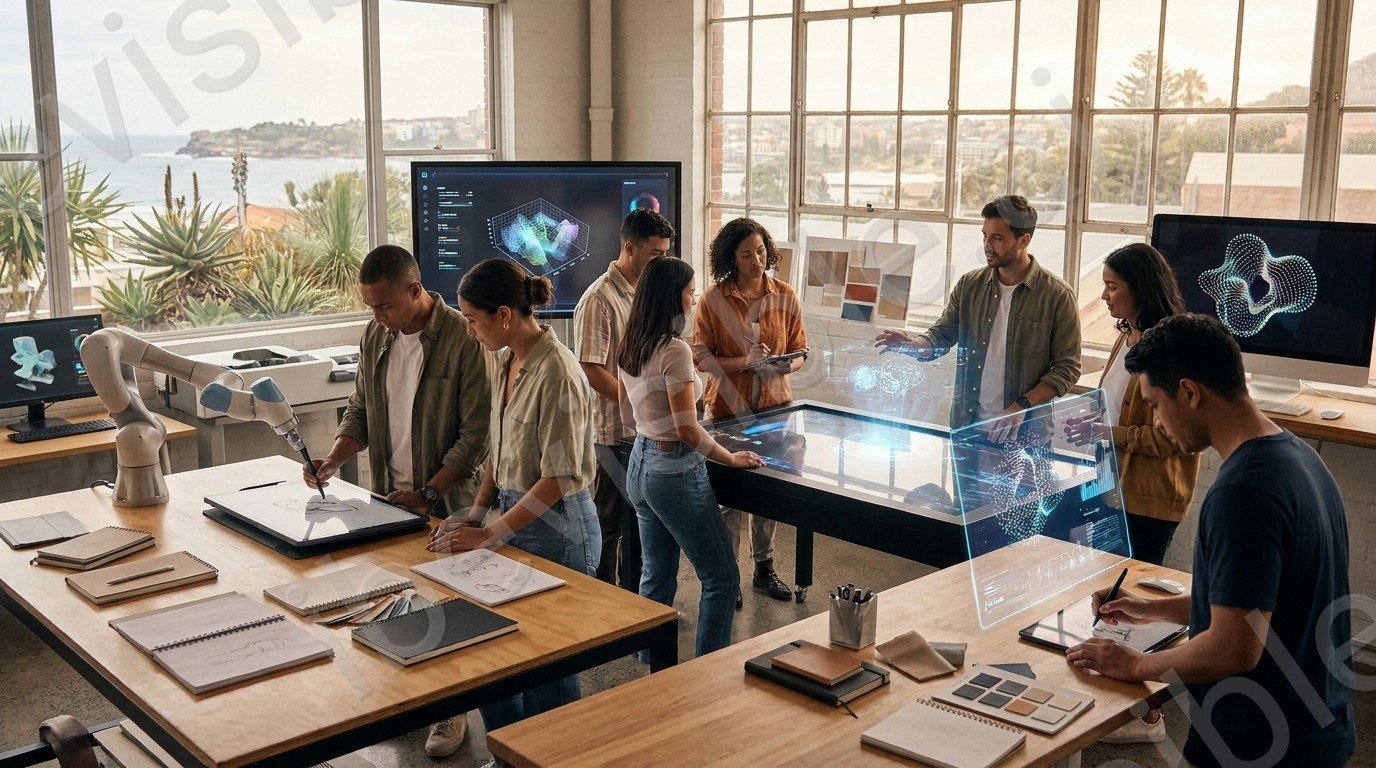
Australian design agencies have begun to incorporate these hybrid workflows, integrating AI to optimise processes while maintaining the integrity of creative vision. By doing so, they can deliver more innovative solutions to clients, enhancing both efficiency and creative output. This symbiotic relationship between human and machine is reshaping the industry, allowing designers to redefine their roles as curators and art directors.

Ethics and Intellectual Property in AI Design

The integration of AI into design also brings forth ethical and legal considerations. Intellectual property rights and client ownership of AI-augmented work are increasingly complex issues. In Australia, where copyright laws are stringent, designers and agencies must navigate these legal landscapes carefully to protect their work and clients.

Ethical design practices involve transparency about the use of AI in the creative process. This includes ensuring that clients are aware of how AI is being utilised, and addressing concerns over originality and authorship. As AI continues to evolve, establishing clear ethical guidelines will be crucial in maintaining trust and integrity within the industry.

The Future of Design Education: Preparing for an AI-Integrated Industry

As AI becomes more embedded in the design industry, educational institutions in Australia are adapting to prepare the next generation of designers. Courses are increasingly focusing on new competencies like prompt engineering and AI orchestration, equipping students with the skills necessary to thrive in an AI-integrated workplace.

This shift is reflected in the curriculum of leading Australian universities, where emphasis is placed on understanding AI tools and their applications. By fostering a new breed of designers who are adept at working alongside AI, these institutions are ensuring that creativity remains at the forefront of the industry, powered by cutting-edge technology.

Frequently Asked Questions

AI cannot replace human creativity, as it lacks emotional understanding and cultural nuance. However, it can enhance creativity by automating routine tasks.

AI is used to automate repetitive tasks, generate design variations, and assist in the creative process, allowing designers to focus on strategic and creative work.

Ethical concerns include intellectual property rights and transparency in how AI is used in design. It’s crucial to establish clear guidelines to maintain trust in the industry.

Australian design agencies are using AI to optimise workflows, enhance creative outputs, and redefine roles, integrating AI as a tool to aid human creativity.

Design education is incorporating AI into its curriculum, focusing on skills like prompt engineering and AI orchestration to prepare students for future industry demands.