Key Takeaways
- AI is revolutionising creative processes by automating repetitive tasks and enhancing creativity.
- The legal landscape for AI-generated content is complex; designers must seek legal guidance to protect intellectual property.
- Australian designers should focus on developing skills in prompt engineering and model training.
- Traditional design tools remain essential for quality assurance in AI outputs.
Key Answer
AI-generated content is reshaping the Australian design landscape by enabling efficiency and creativity, yet poses challenges such as intellectual property rights and the need for new skill sets.
As technology continues to evolve at a breakneck pace, the design industry finds itself on the cusp of a significant transformation. ‘The Future of AI-Generated Visual Content: What Designers Should Expect’ is an increasingly pertinent discussion, especially in Australia’s vibrant creative scene. The integration of artificial intelligence (AI) in design processes offers both promising opportunities and substantial challenges that designers must navigate to maintain their relevance and competitive edge.
Revolutionising Creative Processes
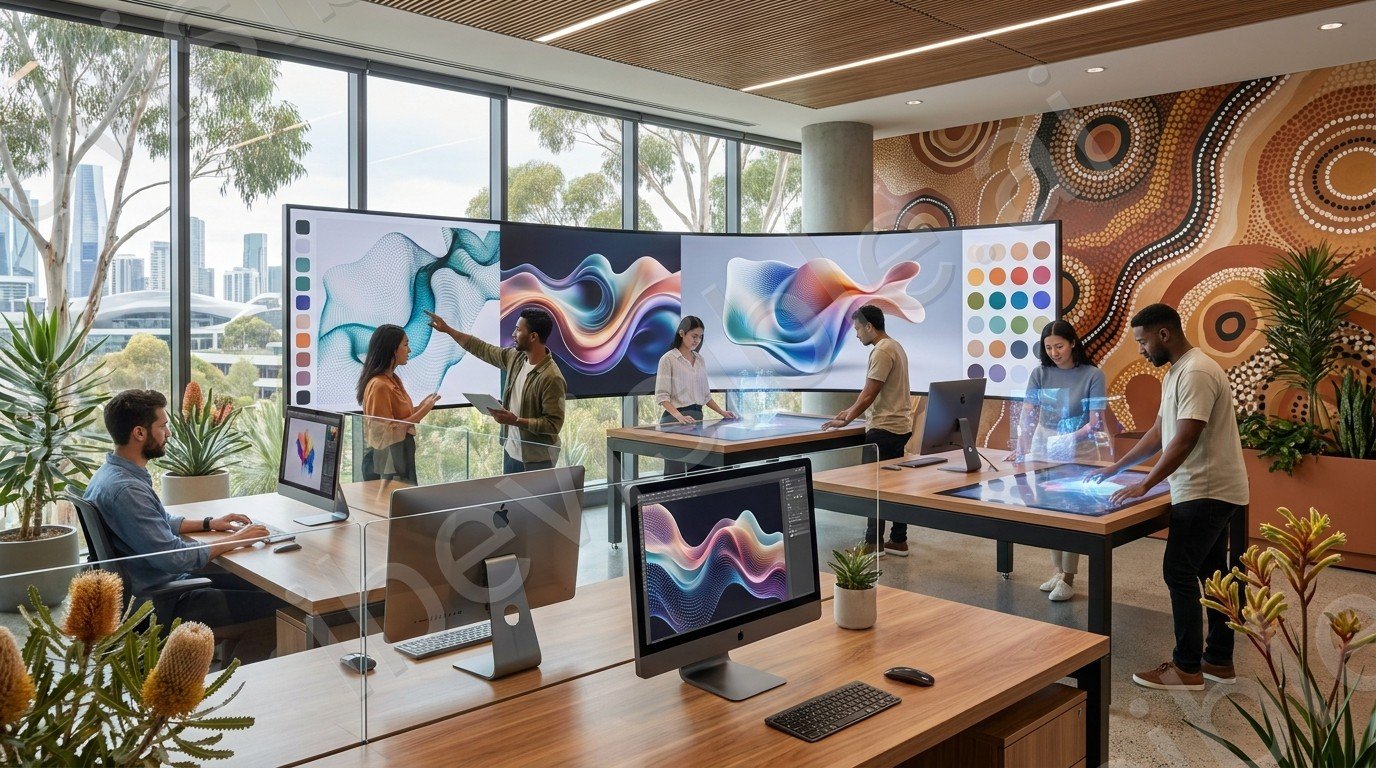
The integration of AI in design is not just a futuristic concept but a current reality reshaping creative processes. In Australia, studios are adopting AI tools that allow designers to automate repetitive tasks, such as image resizing and colour correction, thereby freeing up valuable time for more strategic work. This shift enables designers to focus on ideation and high-level creative strategy, essential for staying competitive.
AI tools are also enhancing the quality of work. Through machine learning algorithms, AI can analyse vast datasets to inform design decisions, ensuring that the final product is both aesthetically pleasing and functionally robust. Such capabilities allow designers to push the boundaries of creativity, offering clients solutions that are both innovative and tailored to their specific needs.
The Legal Landscape: Navigating Intellectual Property
One of the primary challenges in adopting AI-generated visual content is navigating the complex legal landscape, particularly concerning intellectual property rights. In Australia, the legal framework is still evolving, leaving designers in a grey area regarding ownership of AI-generated works. According to experts, a crucial step for designers is to seek legal guidance to protect their creations and ensure compliance with copyright laws.
Designers must also remain vigilant about integrating AI-generated content into client projects. It’s vital to establish clear agreements that define the ownership and usage rights of these digital assets, safeguarding both the client’s and the designer’s interests.
Expert Perspective
Design and Technology Expert
AI is not a threat to designers but a transformative tool that elevates their role from execution to strategy and curation. By mastering new skills and adopting AI tools, Australian designers can lead innovation in visual content creation.
Transitioning from Creation to Curation
As AI takes on more of the executional tasks in design, the role of the designer is gradually shifting from creator to curator and art director. This transition requires designers to hone their skills in aesthetic judgement and strategic thinking, ensuring that AI-generated content aligns with brand guidelines and client expectations.
Incorporating AI does not diminish the designer’s role but rather amplifies it by demanding a higher level of conceptual thinking and visual storytelling. Designers in Australia are urged to embrace this change, adopting a mindset that values strategic oversight as much as creative execution.
Harnessing Technical Prompt Engineering
To effectively leverage AI in design, Australian designers need to develop new skills such as prompt engineering and model training. These technical proficiencies allow designers to guide AI tools in generating content that maintains brand consistency and meets creative briefs.
An advanced understanding of tools like LoRAs (Low-Rank Adaptation) and ControlNet can significantly enhance a designer’s ability to produce consistent, high-quality work. These skills ensure that AI-generated outputs are not just random creations but are strategically aligned with the project’s goals.
Quality Assurance in the Age of AI
AI-generated content is not without its flaws, often producing outputs with anatomical errors or lighting inconsistencies. Australian designers must implement robust quality control measures to address these ‘AI hallucinations’. Traditional tools like Photoshop and Illustrator remain indispensable for correcting these errors and ensuring the final product meets professional standards.
Moreover, designers should create workflows that seamlessly integrate AI tools with traditional software, enhancing the overall quality and consistency of visual content. This hybrid approach empowers designers to offer clients polished, error-free deliverables that leverage the best of both worlds.
Economic Implications: Rethinking Pricing Models
The integration of AI into design workflows prompts a necessary reevaluation of pricing models. As AI tools increase efficiency, Australian designers may need to move away from traditional hourly billing towards value-based or output-based pricing. This shift reflects the true value and strategic contribution of AI-enhanced design work.
Adopting new pricing models can not only boost profitability but also foster stronger client relationships by providing more predictable and transparent pricing structures. Designers are encouraged to openly communicate these changes, emphasising the added value that AI integration brings to their services.
Next Steps for Australian Designers
To stay at the forefront of innovation, Australian designers must embrace continuous learning and adaptation in the face of AI advancements. Engaging with local industry events and educational platforms can provide valuable insights into emerging AI tools and trends.
By proactively integrating AI into their workflows, designers can unlock new creative potentials and streamline processes. Embracing this technological evolution ensures that they remain competitive in a rapidly changing industry landscape.
Frequently Asked Questions
Designers should seek legal advice to understand intellectual property rights and establish clear agreements regarding the ownership and usage of AI-generated assets.
Designers should develop skills in prompt engineering and model training to effectively utilise AI tools for consistent and high-quality output.
AI is prompting a shift from hourly billing to value-based or output-based pricing, reflecting the strategic value of AI-enhanced work.
Traditional tools like Photoshop and Illustrator are crucial for correcting errors and ensuring the quality of AI-generated content.
AI automates executional tasks, requiring designers to focus more on aesthetic judgement and strategic oversight.