
Key Takeaways
- Automation in 2026 is driven by advanced AI, enhancing efficiency over manual labor.
- Multiple industries, including manufacturing and healthcare, are adopting automation for precision and speed.
- Future automation will focus on complementing human roles, not just replacing them.
- Transitioning to automation requires strategic planning and workforce adaptation.
Key Answer
Automation in 2026 offers unmatched efficiency and reliability over manual work, driven by advances in AI, reducing errors, and increasing output across industries.
In the rapidly evolving landscape of technology, automation has emerged as a game-changer, fundamentally transforming industries by eclipsing the capabilities of manual labor. “Why Automation Beats Manual Work: A 2026 Guide” delves into this paradigm shift, exploring how advancements in AI and automation are setting new standards of efficiency and reliability across various sectors.
Understanding the Technological Leap
The past decade has witnessed an unprecedented leap in technology, with automation leading the charge. The integration of AI into everyday business processes has redefined efficiency, enabling industries to move away from the unpredictability of human error inherent in manual work. According to the AI Automation for Small Businesses, AI systems now handle tasks that were once considered too complex for machines, such as nuanced decision-making and predictive analytics.
The Case for Automation: An Industry Analysis
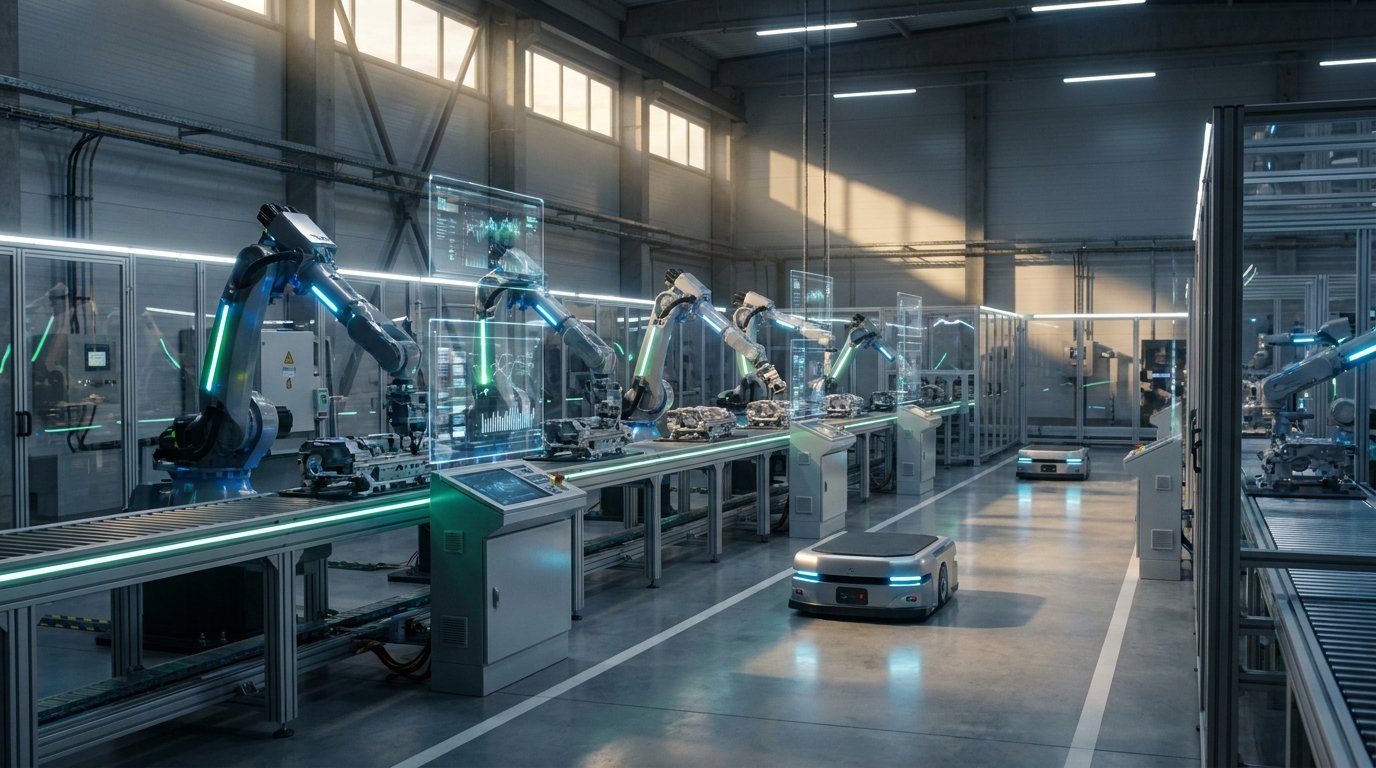
Automation’s impact can be observed across multiple industries, from manufacturing to healthcare. In manufacturing, AI-driven robotics enhance production lines by improving precision and reducing waste. For example, robotic arms now perform delicate operations that require a high degree of precision, previously impossible with human labor. In the healthcare sector, AI automates patient data analysis, ensuring faster diagnostics and reducing potential for human error.
Moreover, financial institutions leverage AI for fraud detection and risk management, drastically reducing operational costs and enhancing security protocols. This widespread adoption illustrates why automation is increasingly favored over manual labor, especially in tasks requiring consistency and accuracy.
| Industry | Automation Impact | Manual Labor Limitation |
|---|---|---|
| Manufacturing | Enhanced precision and reduced waste | Prone to errors and inefficiencies |
| Healthcare | Faster diagnostics with data analysis | Human error in data handling |
| Finance | Improved fraud detection | High operational costs |
Expert Perspective
Technology Strategist
In my role as a technology strategist, I’ve witnessed firsthand the transformative power of AI-driven automation. It not only enhances operational efficiency but also opens up new avenues for workforce development. As we move towards 2027, the challenge will be balancing technological integration with human-centric strategies to maximize both innovation and employment opportunities.
Expert Predictions: The Future of Automation
Industry experts predict that by 2027, automation will be even more integrated into business operations, with AI advancements continuing to drive this change. As noted by AI Implementation Services, automation will not only replace repetitive tasks but also complement human capabilities, allowing a focus on more strategic roles. This shift is expected to create new job opportunities focused on managing and improving AI systems rather than traditional manual tasks.
Furthermore, as technology progresses, the cost of implementing AI will decrease, making it more accessible for smaller enterprises. This democratization of technology promises to level the playing field, enabling businesses of all sizes to benefit from automation’s efficiencies.
Overcoming the Challenges of Transition
Transitioning from manual work to automation comes with its challenges. Companies must address issues such as workforce retraining and integrating new technologies with existing systems. Successful transition strategies include comprehensive training programs and phased implementation plans. This approach minimizes disruption and helps workers adapt to new roles.
Addressing employee resistance is crucial, as it can hinder technological adoption. By engaging workers in the transition process and highlighting the benefits of automation, companies can foster an environment of innovation and growth.
Realizing the Benefits of Automation
The primary benefits of automation include increased throughput, reduced operational costs, and enhanced workplace safety. Automation technologies significantly lower the risk of workplace accidents, as machines can perform hazardous tasks without risking human health. For instance, the use of autonomous vehicles in logistics reduces the incidence of delivery mishaps.
Additionally, automation allows for 24/7 operations, something manual labor cannot achieve without substantial cost implications. This ability to maintain consistent output around the clock without fatigue leads to higher productivity and profitability.
Frequently Asked Questions
Industries such as manufacturing, healthcare, and finance benefit significantly from automation, as it enhances precision, speeds up processes, and reduces errors.
Automation improves efficiency by reducing human error, increasing precision, and enabling 24/7 operations without the need for breaks.
Challenges include workforce retraining, integrating new technologies, and overcoming employee resistance. Strategic planning can ease these transitions.
While automation will replace some manual tasks, it also creates new opportunities for roles focused on managing and improving AI systems.
As the cost of AI technology decreases, automation becomes increasingly accessible to small businesses, allowing them to compete with larger entities.