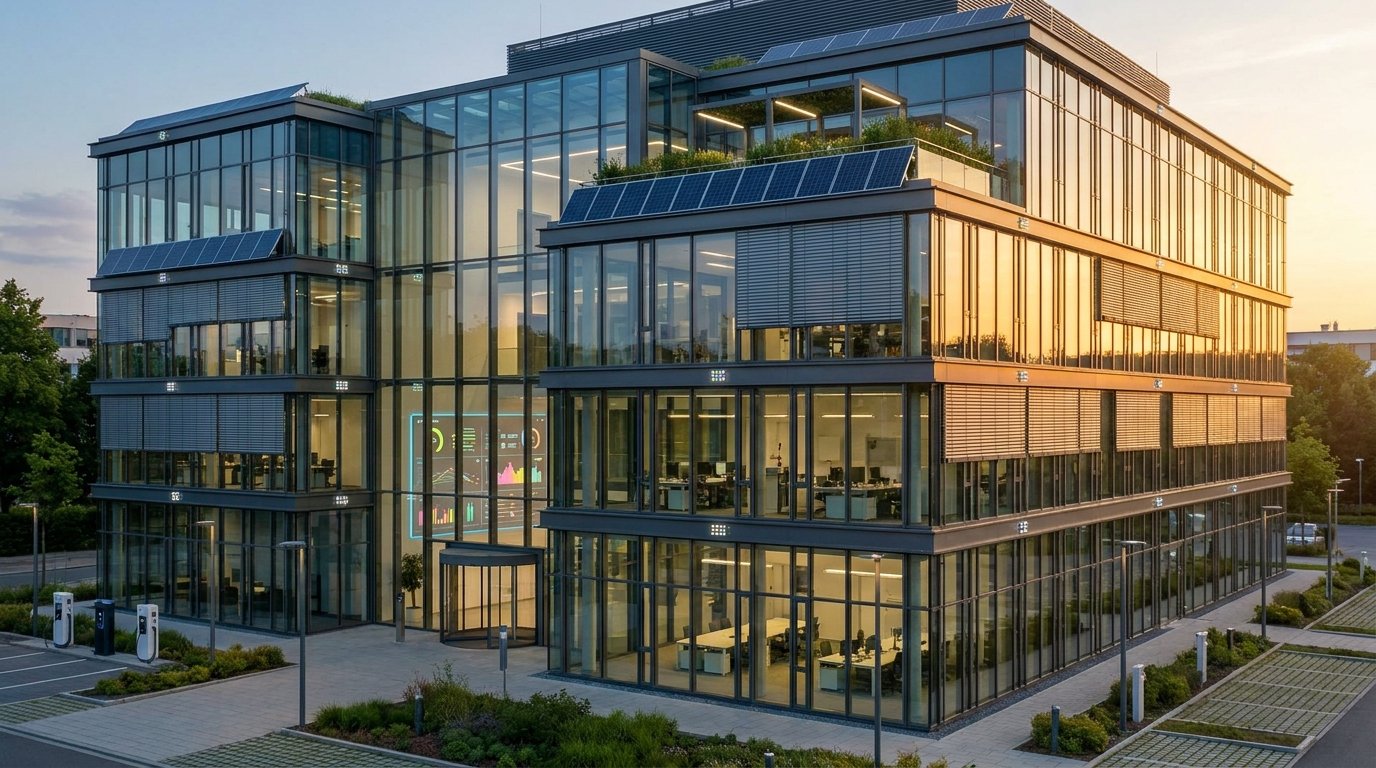

Key Takeaways
- Smart building management is crucial for reducing energy costs and enhancing sustainability.
- IoT sensors and AI-driven predictive maintenance are key components of an effective smart building system.
- Cybersecurity is essential to protect smart building systems from potential threats.
- Both retrofitting existing buildings and constructing new smart buildings offer distinct advantages.
Key Answer
Smart building management can reduce energy costs by optimising resource usage through IoT sensors, AI-driven predictive maintenance, and advanced building management systems, promoting efficient and sustainable practices.
In the current era of technological innovation, reducing energy costs through smart building management is not just a futuristic vision but an attainable reality. With the surge in urbanisation, managing energy efficiently has become imperative for modern cities. Smart building technology provides a dynamic solution, allowing building owners and facility managers to optimise energy use, enhance sustainability, and significantly cut costs.
Harnessing the Power of Smart Technology
Smart technology is at the heart of modern building management strategies. By incorporating IoT sensors, buildings can continuously monitor energy consumption in real-time. This constant flow of data allows for precise adjustments to systems such as lighting, heating, and cooling, based on occupancy and environmental conditions. Additionally, AI-driven predictive maintenance ensures that potential energy spikes are identified and resolved before they occur, thus preventing unnecessary energy wastage.
The integration of these technologies forms a robust building management system that is agile and responsive. Such a system not only improves energy efficiency but also enhances occupant comfort by maintaining optimal indoor conditions.
The digital transformation of buildings through smart technology provides a dual benefit: significantly reducing operational costs and contributing to environmental conservation. This approach aligns with global sustainability goals, making it a strategic priority for organisations around the world.
| Feature | Benefit |
|---|---|
| IoT Sensors | Real-time energy monitoring and optimisation |
| AI-driven Predictive Maintenance | Prevents energy spikes and reduces maintenance costs |
| Building Management Systems | Enhanced control over building operations |
Smart Building Systems: SaaS vs. On-Premise
Choosing between Software as a Service (SaaS) and on-premise solutions for smart building management is a pivotal decision. SaaS platforms offer scalability and lower upfront costs, making them ideal for organisations seeking flexibility. These systems can be continuously updated with new features and security patches, ensuring that buildings remain at the cutting edge of technology.
On the other hand, on-premise solutions provide greater control and customisation. They are suitable for businesses with specific requirements that necessitate bespoke system configurations. However, they typically involve higher initial investment and ongoing maintenance costs.
When evaluating these options, facility managers should consider factors like scalability, budget constraints, and specific building requirements to determine the best fit for their needs.
| Solution Type | Advantages | Disadvantages |
|---|---|---|
| SaaS | Low upfront cost, scalability | Dependent on internet connectivity |
| On-Premise | Customisation, control | Higher initial investment |
Expert Perspective
Building Technology Specialist
Reducing energy costs through smart building management is increasingly critical in our tech-driven world. As an expert, I have seen firsthand how effectively integrated systems can transform building operations, leading to substantial energy savings and enhanced occupant satisfaction. The future of building management lies in these smart solutions.
Retrofitting vs. New Construction: A Comparative Insight
Retrofitting existing buildings with smart technology is often more cost-effective than constructing new smart buildings. By integrating IoT sensors and cloud-based Building Management Systems (BMS) into current infrastructures, older buildings can achieve significant energy savings with minimal disruption.
This approach is particularly beneficial for historical or landmark buildings where new construction is not feasible. Retrofitting extends the life of these structures while ensuring they meet modern energy standards.
Conversely, new constructions offer a blank canvas for implementing the latest smart technologies from the ground up, allowing for more comprehensive system integration. While initially more expensive, this method offers greater long-term energy savings and enhanced building performance.
In both scenarios, strategic planning and careful consideration of technology compatibility are essential for successful implementation.
| Method | Advantages | Disadvantages |
|---|---|---|
| Retrofitting | Cost-effective, less disruption | Limited by existing infrastructure |
| New Construction | Optimised for smart tech, higher energy savings | Higher initial costs |
Navigating the Interoperability Challenge
One of the significant hurdles in smart building management is ensuring interoperability among various systems and devices. This challenge often arises due to the use of different communication protocols such as BACnet, LonWorks, and Modbus.
Open-source standards play a crucial role in overcoming this issue. By adopting these standards, organisations can avoid vendor lock-in, ensuring that their systems remain flexible and future-proof. This approach not only enhances system integration but also simplifies the process of scaling and upgrading technology.
Facility managers must prioritise systems that are designed to operate on open standards. This decision will facilitate seamless integration and ensure that building operations are both efficient and adaptable to future technological advancements.
| Protocol | Key Features |
|---|---|
| BACnet | Widely used, supports multiple devices |
| LonWorks | Flexible, interoperable |
| Modbus | Simple, cost-effective |
Enhancing Occupant Comfort and Productivity
Smart environmental controls significantly impact occupant comfort and productivity, contributing to a positive workplace environment. By optimising air quality and lighting levels, smart systems enhance employee well-being and performance.
Studies have shown a direct correlation between improved environmental controls and increased productivity. Better air quality reduces absenteeism and enhances focus, while optimal lighting conditions improve cognitive function and mood.
Investing in smart building management not only reduces energy costs but also boosts organisational productivity. This dual benefit underlines the importance of creating spaces that are both energy-efficient and conducive to human health and performance.
| Feature | Impact on Occupants |
|---|---|
| Air Quality Control | Reduces absenteeism, improves focus |
| Lighting Optimisation | Enhances mood, boosts cognitive function |
Cybersecurity: Safeguarding Smart Building Systems
The rise of smart buildings also brings cybersecurity challenges that must be addressed to protect sensitive data and ensure system integrity. As buildings become more connected, the risk of cyber-attacks increases.
Implementing robust cybersecurity measures is crucial. This includes encrypting data, employing firewalls, and conducting regular security audits. A comprehensive security checklist should be part of the overall building management strategy to mitigate risks effectively.
Facility managers need to stay informed about the latest cybersecurity threats and updates. By doing so, they can implement proactive measures to safeguard their building systems, ensuring that energy management networks remain secure and resilient.
| Security Measure | Purpose |
|---|---|
| Data Encryption | Protects sensitive information |
| Firewalls | Blocks unauthorized access |
| Security Audits | Identifies vulnerabilities |
Next Steps in Smart Building Implementation
Embracing smart building management is a crucial step towards achieving greater energy efficiency and sustainability. Organisations should begin by conducting a thorough energy audit to identify areas of improvement. Downloadable checklists and tools can facilitate this process, providing actionable insights.
After assessing current systems, facility managers should prioritise the integration of IoT sensors and cloud-based BMS to streamline operations. It is essential to engage with technology providers who offer scalable and future-proof solutions.
Finally, ongoing monitoring and optimisation of building systems are vital. By continuously refining operations and adopting the latest technologies, buildings can maintain peak performance and energy efficiency, contributing to both environmental goals and cost savings.
| Step | Objective |
|---|---|
| Energy Audit | Identify improvement areas |
| IoT Integration | Streamline operations |
| Continuous Monitoring | Maintain peak efficiency |
Frequently Asked Questions
Smart building management significantly reduces energy costs, enhances occupant comfort, and improves operational efficiency through the use of advanced technology like IoT sensors and AI-driven systems.
Smart buildings improve energy efficiency by utilising IoT sensors and AI technology to optimise the use of heating, cooling, and lighting systems based on real-time data and occupancy patterns.
AI in smart building management helps predict maintenance needs, optimise energy usage, and prevent energy spikes through data analysis and predictive algorithms.
Cybersecurity is crucial in smart building systems to protect against cyber-attacks, safeguard sensitive data, and ensure the integrity of building operations.
Smart building management improves occupant productivity by optimising air quality and lighting, which enhances employee focus, mood, and overall well-being.