
Share this article

Table of Contents

AI-Powered Toys: Shaping the Future of Childhood Learning and Cognitive Development

AI-Powered Toys: Shaping the Future of Childhood Learning and Cognitive Development

Key Takeaways

  • AI-powered toys offer personalised learning experiences that adapt to each child’s unique needs, enhancing cognitive development.
  • Data privacy is a significant concern with AI toys, necessitating careful evaluation of manufacturers’ data policies.
  • AI toys facilitate a phygital play experience, merging physical and digital interaction for comprehensive sensory engagement.
  • Through adaptive learning, AI toys adjust in real time to a child’s abilities, maintaining engagement and promoting growth.

Key Answer

AI-powered toys are revolutionising childhood education by offering personalised learning experiences that adapt to each child’s unique cognitive development. These toys utilise AI technologies to engage children interactively while supporting crucial skills like problem-solving and literacy.

AI-Powered Toys: Shaping the Future of Childhood Learning and Cognitive Development is rapidly transforming the landscape of educational play. As artificial intelligence continues to advance, the integration of AI in children’s toys offers new opportunities for enhancing cognitive skills and promoting engaging learning experiences. By leveraging AI technologies such as natural language processing and computer vision, these toys are not only revolutionising play but also providing tailored educational experiences that grow with the child.

Why AI-Powered Toys are Key to Future Learning

AI-powered toys are crucial in today’s educational landscape because they provide interactive and personalised learning experiences. By using AI technologies like natural language processing, these toys can adapt to a child’s learning pace, offering tailored challenges that match their current cognitive abilities. This personalisation is vital as it helps children develop critical skills such as problem-solving and literacy at their own speed.

Moreover, AI toys often integrate real-time feedback systems, which encourage positive reinforcement and motivation for children. The constant feedback loop supports children in understanding their progress and areas needing improvement, making learning a continuously evolving journey.

Feature Benefit Risk
Adaptive Learning Personalised educational experience Potential data privacy concerns
Real-Time Feedback Encourages motivation and improvement Dependence on technology for validation

Data Privacy in AI Toys: A Critical Concern

While AI-powered toys offer numerous educational benefits, they also bring data privacy concerns. Many of these toys collect biometric data and record conversations to personalise learning. This raises ethical questions about how this sensitive information is stored and used.

Manufacturers must adhere to stringent data protection regulations, ensuring that any collected data is encrypted and stored securely. Parents are encouraged to scrutinise privacy policies and choose toys from reputable companies committed to safeguarding children’s data.

Expert Perspective

Child Development Specialist

In an era where technology continues to infiltrate every aspect of our lives, AI-powered toys represent a pivotal shift in educational methods. The ability to tailor learning experiences to individual needs while maintaining a balance with data privacy concerns is paramount. Parents and educators must stay informed about these advancements to harness their full potential for children’s cognitive and social development.

The Phygital Bridge: Combining Physical and Digital Play

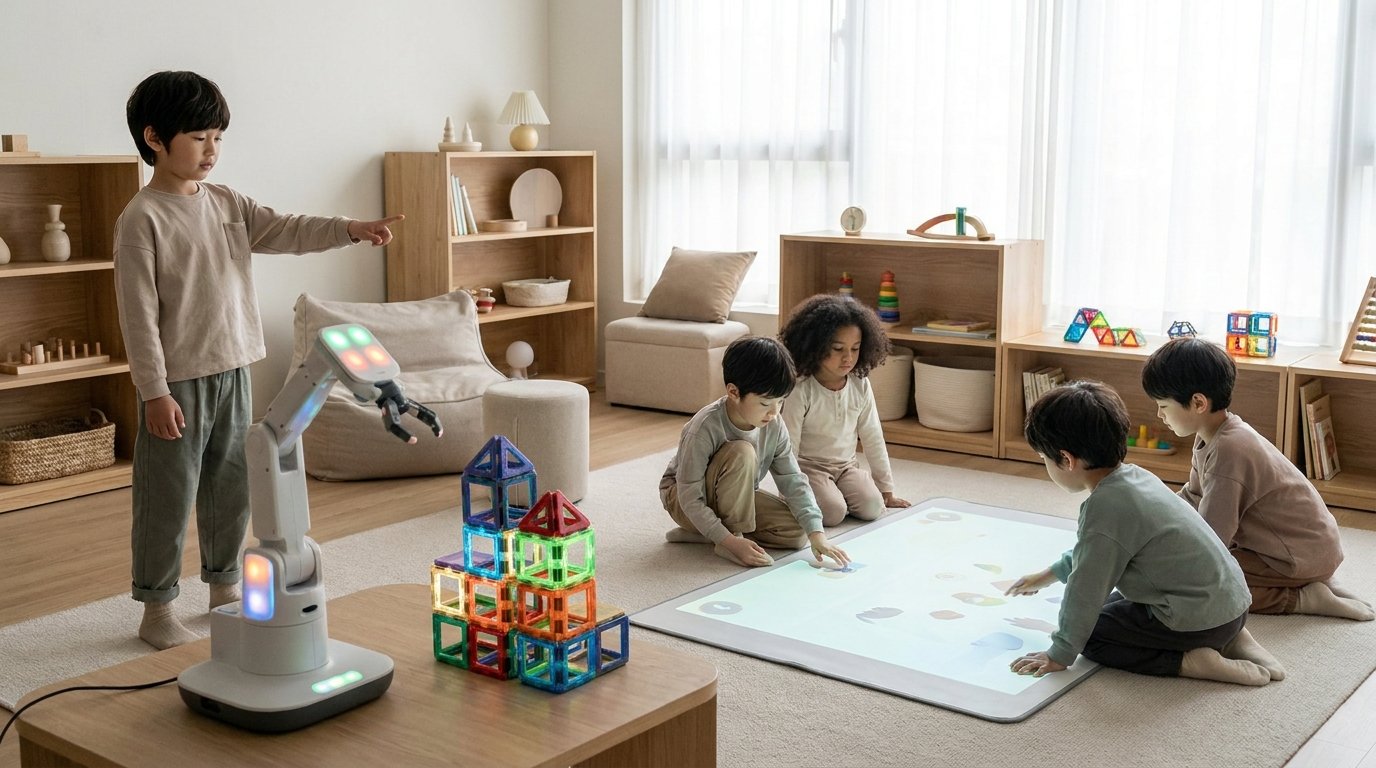
AI-powered toys effectively bridge the gap between physical and digital play, known as the ‘phygital’ experience. Unlike passive screen time, these toys engage multiple senses, which is crucial for cognitive sensory development. For instance, AI toys can react to a child’s physical actions, such as moving pieces in a puzzle, by providing digital feedback or augmenting the experience with virtual elements.

This blending of physical and digital elements encourages children to engage more deeply with learning materials, facilitating a more comprehensive understanding and retention of information.

Adaptive Learning Curves and Real-Time Adjustments

A standout feature of AI-powered educational toys is their ability to adapt in real time to the child’s learning curve. This ensures that the toys remain challenging yet achievable, preventing boredom while avoiding frustration. By adjusting difficulty levels based on performance, AI toys can cater to a child’s individual learning needs.

Such dynamic adaptation is instrumental in cognitive development, as it continuously challenges the child at just the right level. This keeps the learning process engaging and aligned with the child’s developmental milestones, promoting sustained educational growth.

Encouraging Parental Engagement

AI toys are designed not to replace human interaction but to complement it. They provide opportunities for parental involvement, allowing parents to participate in co-play activities that enhance social-emotional learning (SEL).

Parental oversight ensures that the child interacts with the toy in a beneficial manner, fostering valuable skills such as empathy, cooperation, and communication. AI toys often include features that allow parents to track progress and receive insights into their child’s learning journey, further promoting active parental engagement.

Longevity and Evolution Through Software Updates

One of the advantages of AI-powered toys is their ability to grow with the child through software updates. These updates can introduce new features and learning modules, ensuring the toy remains relevant and engaging as the child develops.

This potential for evolution represents a significant return on investment, as parents need not frequently purchase new toys to suit their child’s advancing educational needs. By supporting a child from toddlerhood through school age, AI toys offer a sustainable learning solution.

Frequently Asked Questions

AI-powered toys contribute to cognitive development by providing personalised learning experiences that adapt to each child’s unique needs, enhancing skills such as problem-solving and literacy.

Privacy concerns with AI toys include the collection and storage of biometric data and conversations, requiring manufacturers to adhere to strict data protection regulations.

The phygital bridge in AI toys refers to the combination of physical and digital play elements, engaging multiple senses for enhanced cognitive sensory development.

AI toys are designed to complement, not replace, traditional learning methods by integrating technology with interactive and personalised education.

AI toys evolve with a child’s development through software updates that introduce new features and learning modules, ensuring ongoing engagement.