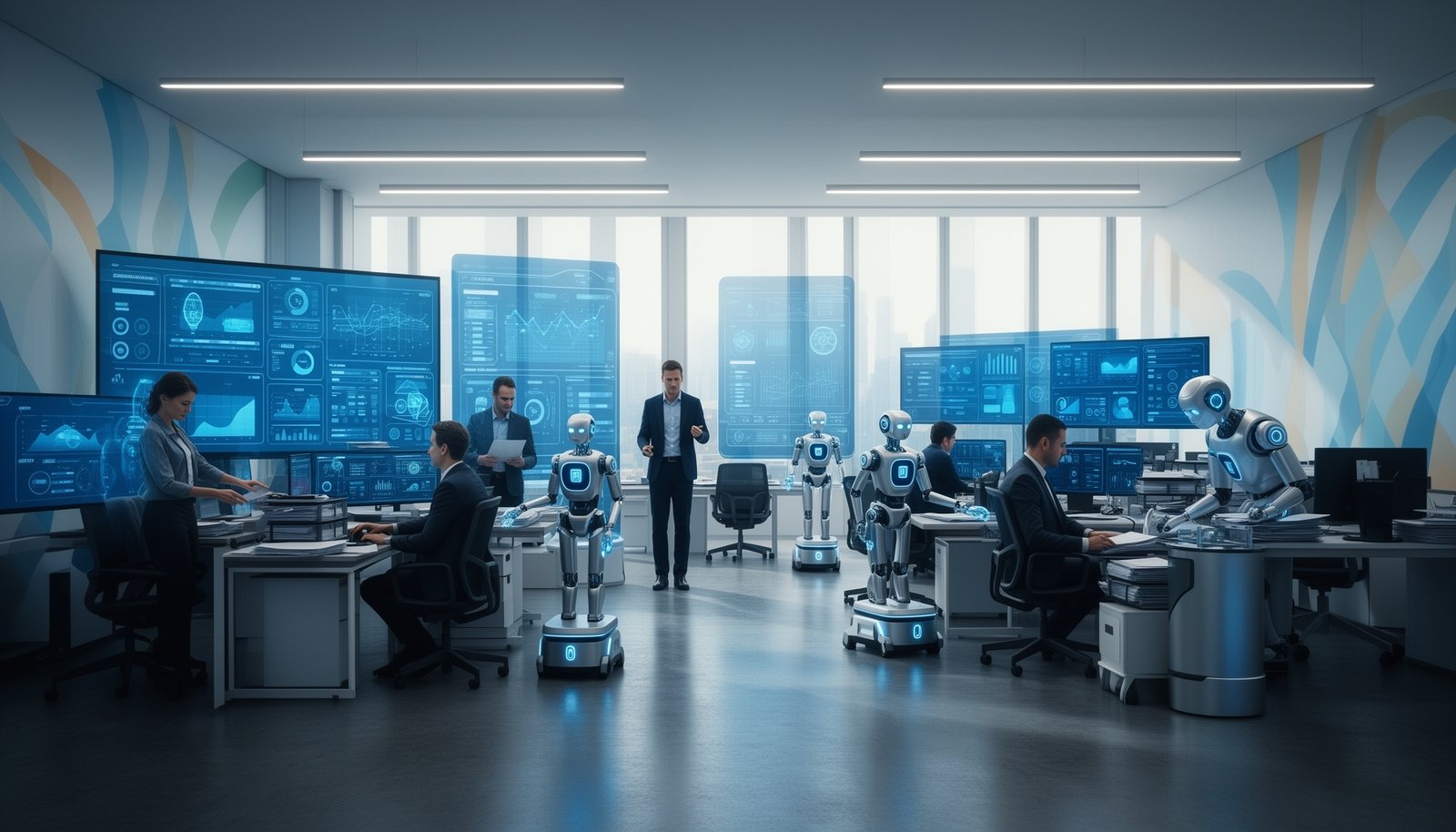

Key Takeaways
- Agentic AI enables autonomous decision-making, enhancing human productivity.
- Human intelligence complements AI with creativity and ethical judgement.
- Strategic AI integration and employee training are essential for successful implementation.
- Ethical AI use requires transparency, accountability, and adherence to regulations.
Key Answer
Human Intelligence and Agentic AI are transforming collaboration in the digital workplace by enhancing decision-making, productivity, and innovation.
In today’s fast-paced world, the integration of human intelligence with agentic AI is revolutionising the way businesses operate. The digital workplace is undergoing a significant transformation as these two forces merge, enabling enhanced collaboration, productivity, and innovation. As companies strive to remain competitive, understanding how to effectively harness this collaboration is crucial.
Understanding Agentic AI and Its Role
Agentic AI refers to artificial intelligence systems that possess the capacity to act independently, making decisions and taking actions without direct human intervention. Unlike traditional AI models that rely heavily on pre-programmed algorithms, agentic AI systems are designed to learn and adapt through experience. This autonomous capability makes them uniquely suited to augmenting human tasks in the digital workplace.
The role of agentic AI in collaboration is pivotal. It handles routine, data-intensive tasks, allowing human employees to focus on strategic and creative functions. For instance, in sectors such as finance and healthcare, agentic AI can automate processes like data analysis and patient monitoring, freeing human workers to engage in more complex problem-solving activities.
| Feature | Traditional AI | Agentic AI |
|---|---|---|
| Decision Making | Rule-based | Autonomous |
| Learning Method | Supervised | Reinforcement |
| Flexibility | Limited | High |
The Synergy of Human Intelligence and AI
The collaboration between human intelligence and agentic AI is not about replacement but enhancement. Human intelligence brings creativity, emotional insight, and ethical judgement to the table–qualities that are inherently challenging for AI systems to emulate. Meanwhile, AI provides the speed, precision, and capacity to process vast datasets far beyond human capabilities.
This synergy enables a more dynamic approach to workplace challenges. For example, in creative industries, AI can generate multiple design prototypes quickly, which humans can then refine and perfect. Similarly, AI-driven insights can inform strategic decisions in marketing, allowing human teams to focus on crafting compelling narratives and customer engagement strategies.
Expert Perspective
Digital Transformation Expert
The convergence of human intelligence and agentic AI marks a pivotal moment in workplace evolution. As an expert in digital transformation, I foresee this collaboration radically enhancing productivity. However, it is crucial that organisations address ethical considerations and equip their workforce to adapt to these technological changes effectively.
Implementing AI in the Digital Workplace
Successful integration of AI into the digital workplace requires a strategic approach. Organisations must first identify areas where AI can deliver the most value, often by automating mundane tasks to liberate human resources for more strategic initiatives.
Training and upskilling employees are also critical. As AI technologies evolve, so too must the skills of the workforce. Providing training programmes that enhance digital literacy and foster an understanding of AI’s capabilities can empower employees to work effectively alongside AI systems.
Moreover, establishing a culture that embraces change and encourages experimentation is vital. Leaders should foster an environment where innovation is rewarded and failures are seen as opportunities to learn, thus maximising the potential of AI-human collaboration.
Challenges and Ethical Considerations
While the benefits of integrating agentic AI into the digital workplace are significant, there are challenges and ethical considerations to address. Privacy concerns, job displacement fears, and the potential for bias in AI decision-making are just a few issues that require careful management.
To navigate these challenges, transparency and accountability must be core components of any AI strategy. Companies should ensure that AI systems are transparent in their operations and decisions. Additionally, maintaining a robust ethical framework can help manage bias and promote fairness, ensuring that AI benefits are equitably distributed across the organisation.
Regulations and standards are also crucial. Organisations must adhere to local and international laws governing AI usage, which can vary significantly across regions. This compliance not only protects companies legally but also reinforces trust with employees and customers.
The Future of Work: A Collaborative Vision
Looking ahead, the future of work is one where human intelligence and agentic AI function in seamless harmony. As technology advances, the digital workplace will continue to evolve, offering new opportunities for collaboration and efficiency.
Emerging technologies such as virtual reality and advanced data analytics promise to further enhance this synergy, creating more immersive and insightful work environments. Organisations that can adeptly integrate these technologies with human skills will likely enjoy a competitive advantage.
In conclusion, while challenges exist, the intersection of human intelligence and agentic AI presents an unparalleled opportunity to reshape the workplace. By embracing this collaboration, businesses can unlock new levels of productivity and innovation, paving the way for a more dynamic and inclusive future of work.
Frequently Asked Questions
Agentic AI refers to systems with autonomous decision-making abilities, capable of acting without direct human intervention.
AI automates routine tasks, allowing humans to focus on strategic activities, thereby improving productivity and creativity.
Ethical concerns include privacy issues, potential job displacement, and bias in AI decision-making, which require careful management.
Companies should identify strategic areas for AI, invest in employee training, and foster a culture that embraces innovation and change.
The future involves seamless AI and human collaboration, with advancements in technology offering new opportunities for efficiency and innovation.