
Share this article

Table of Contents

How AI Came and How AI Little by Little Integrated into Daily Life in Australia

How AI Came and How AI Little by Little Integrated into Daily Life in Australia

Key Takeaways

  • AI has gradually integrated into Australian life, particularly transforming healthcare, finance, and education.
  • AI tools like predictive analytics and intelligent systems enhance efficiency and personalisation.
  • Australia’s focus on AI literacy ensures future generations are prepared for technological advancements.

Key Answer

AI has gradually transformed Australian life, especially in healthcare, finance, and education, by integrating intelligent systems and automation into everyday tasks, enhancing efficiency and innovation.

Artificial Intelligence (AI) has stealthily woven itself into the fabric of daily life in Australia. This transformation did not happen overnight; it evolved gradually, bit by bit. This article explores how AI came and how AI little by little integrated into day-to-day life and how it’s changed various sectors, notably healthcare, finance, and education.

The Journey of AI: A Historical Overview

The origins of AI trace back to the mid-20th century, when pioneering researchers first explored the possibility of creating intelligent machines. Fast forward to the 1990s, AI was mostly a concept limited to academic circles and science fiction. However, by 2010, AI began quietly entering our lives through tools like predictive text and email spam filters. By 2024, AI had become a transformative force, reshaping industries and daily routines across Australia.

In Australia, AI’s journey has been marked by strategic governmental and institutional support. Programmes like the National AI Centre have aimed to foster innovation and develop skills across the country. The steady, incremental integration of AI has been pivotal in driving the nation’s digital transformation, making sectors like healthcare, finance, and education more efficient and innovative.

AI's Impact on Healthcare in Australia

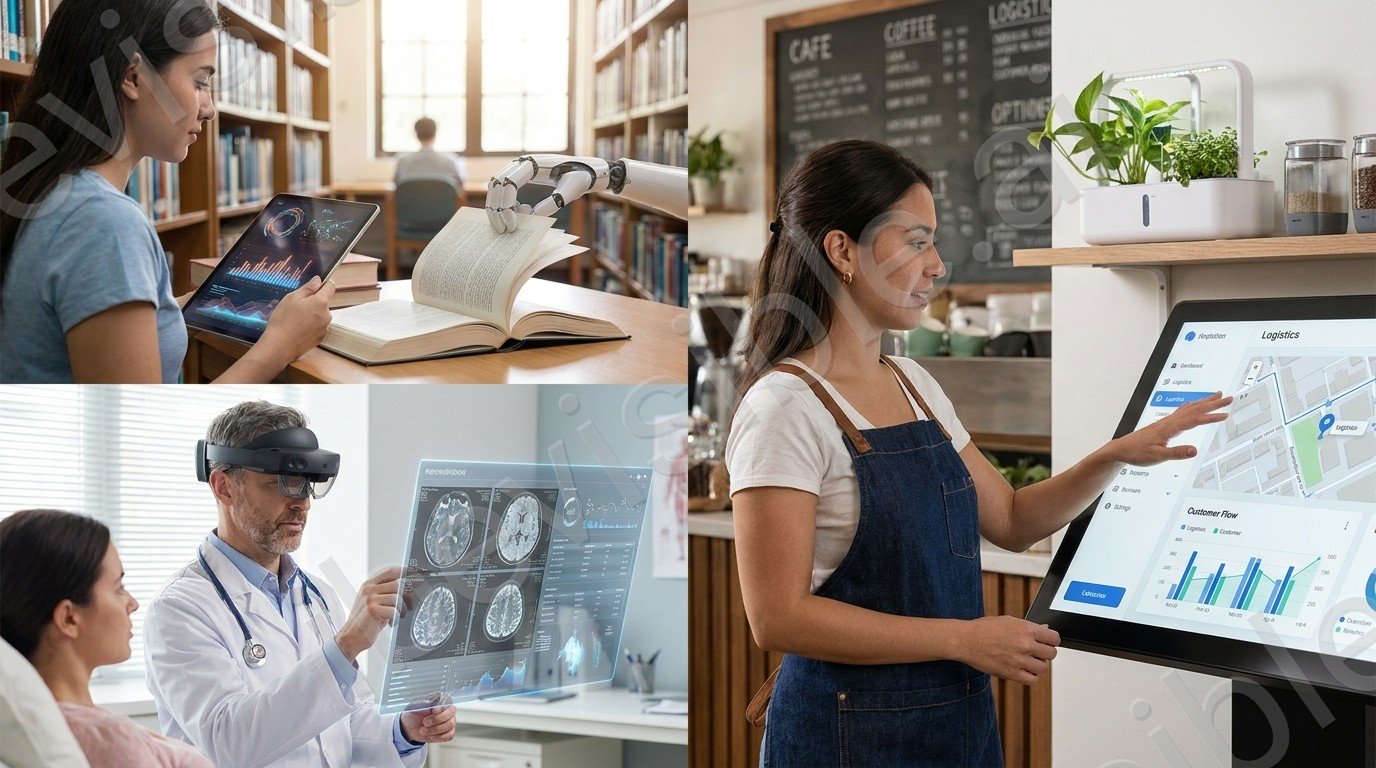
In Australian healthcare, AI technologies have been instrumental in enhancing patient care and operational efficiency. For instance, AI-powered diagnostic tools assist doctors by analysing medical images with greater accuracy than traditional methods. Predictive analytics are being utilised to forecast patient outcomes, helping medical professionals tailor treatments more effectively.

The Covid-19 pandemic accelerated AI adoption, as healthcare providers turned to AI for solutions like telemedicine platforms and automated chatbots to manage patient inquiries. AI has not only helped in diagnosing diseases but also in resource management, ensuring that critical supplies are optimally allocated.

Expert Perspective

AI Integration Specialist

The incremental integration of AI into daily life demonstrates the importance of strategic development and adoption. Australia’s approach, emphasizing education and innovation, serves as a model for other nations. As AI continues to evolve, it’s crucial that we balance technological advancement with ethical considerations to ensure these tools benefit all aspects of society.

Revolutionising Finance with AI

The financial sector in Australia has undergone a significant transformation thanks to AI technologies. Banks and financial institutions use AI for tasks ranging from customer service automation to fraud detection. AI algorithms analyse vast amounts of transaction data to identify unusual patterns, thus mitigating risks and enhancing security.

Moreover, AI has enabled the development of personalised financial services. Digital platforms use AI to provide tailored advice and manage investments, catering to individual needs and preferences. This shift not only increases efficiency but also opens new avenues for customer engagement and service delivery.

AI in Education: Personalising Learning

AI is reshaping educational practices in Australia, offering personalised learning experiences that adapt to the unique needs of each student. Intelligent tutoring systems provide customised feedback and study plans, thereby enhancing learning outcomes. AI-driven analytics help educators identify students at risk, allowing for timely interventions.

Australian universities are at the forefront of integrating AI into their curriculums, preparing students for a future where digital literacy, especially AI literacy, is crucial. This focus on AI is not just about adopting technology but about nurturing a generation that can innovate and lead in a digital world.

How AI Transforms Everyday Life

Beyond specific sectors, AI has infiltrated everyday activities in Australia. Navigation systems, like those powered by Google Maps, use AI for real-time traffic updates and route optimisation. Voice assistants such as Siri and Alexa have become ubiquitous, simplifying tasks ranging from setting alarms to managing smart home devices.

These technologies exemplify how AI, bit by bit, has become an integral part of daily life, enhancing convenience and efficiency. As AI continues to evolve, its role in mundane tasks will likely expand, driving even greater changes in how Australians live and work.

Frequently Asked Questions

AI has improved diagnostic accuracy, forecasted patient outcomes, and optimised resource management in Australian healthcare.

AI enhances security through fraud detection, automates customer service, and offers personalised financial services.

AI personalises learning, provides adaptive tutoring, and prepares students for a digitally driven future.

AI powers navigation systems, voice assistants, and optimises routine tasks, becoming a staple in daily life.

Initiatives like the National AI Centre aim to foster innovation and skill development across various sectors.