
Share this article

Table of Contents

Why AI May Drive Corporate Layoffs in 2026: Essential Insights for Australia

Why AI May Drive Corporate Layoffs in 2026: Essential Insights for Australia

Key Takeaways

  • AI technologies offer efficiency but can lead to job displacement.
  • Strategic workforce restructuring focuses on upskilling rather than layoffs.
  • Economic benefits of AI must be balanced with social implications.
  • Leadership must guide ethical AI integration and employee engagement.

Key Answer

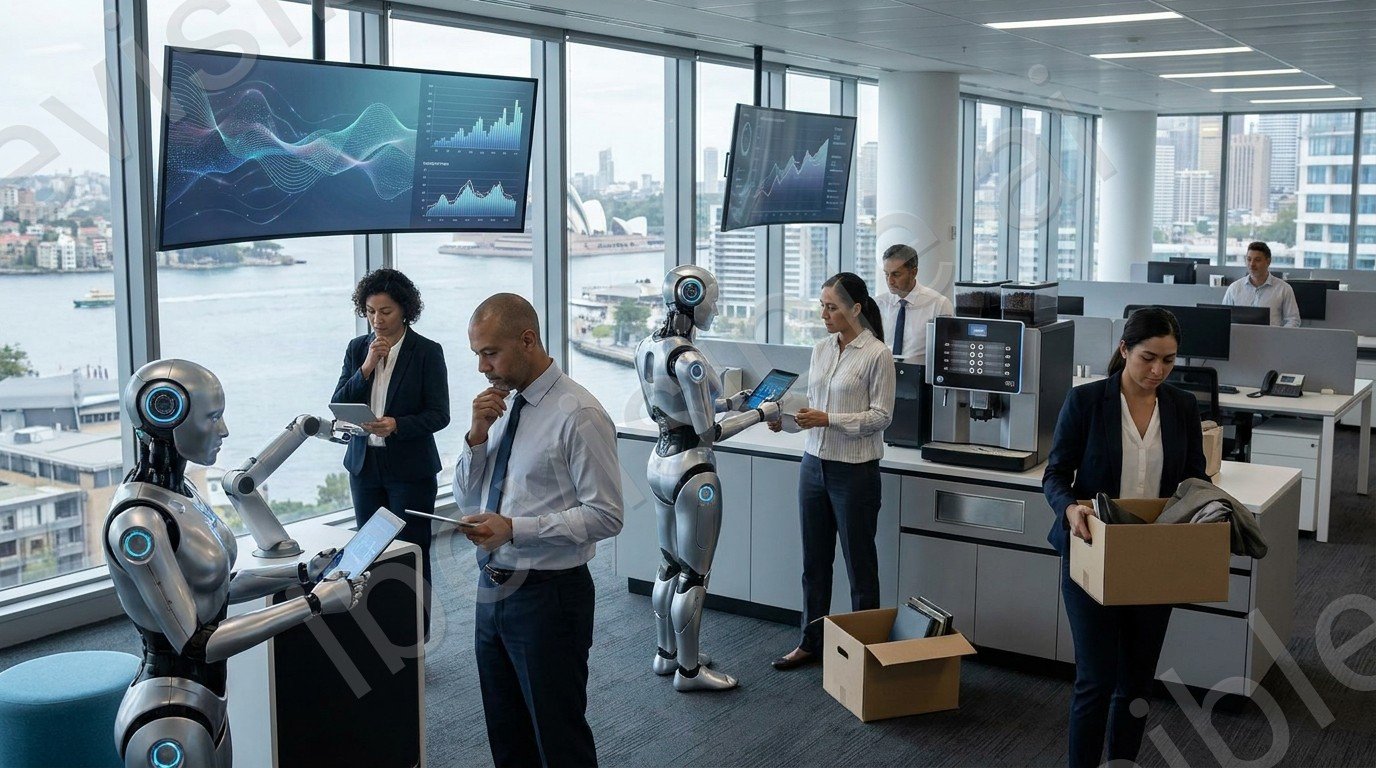
In 2026, AI-driven corporate layoffs in Australia may be propelled by efficiencies AI brings to operations, potentially reducing the need for human labour in repetitive and data-heavy roles.

The emergence of artificial intelligence (AI) is transforming corporate structures worldwide, and Australia is no exception. As organisations increasingly adopt AI technologies, the conversation around potential workforce reductions is gaining momentum. Understanding why AI may drive corporate layoffs in 2026 is crucial for stakeholders seeking to navigate this evolving landscape effectively.

The AI Efficiency Paradigm

AI technologies offer unprecedented efficiencies, which, in turn, challenge traditional workforce structures. By automating routine tasks, AI allows businesses to streamline operations, reduce costs, and enhance productivity. However, this efficiency comes at a cost: the displacement of certain job categories, particularly those based on repetitive or data-intensive tasks.

Organisations in Australia, such as financial institutions and manufacturing sectors, have already begun to utilise AI to optimise operations. For instance, AI-driven chatbots in customer service roles and machine learning algorithms in data analysis are making certain human roles redundant. This shift is not merely a hypothetical scenario but a present reality reshaping workforce dynamics.

While automation boosts productivity, it also raises concerns about the potential for large-scale job losses. As businesses in Australia prepare for 2026, they must carefully evaluate how to balance AI integration with sustainable employment strategies.

Strategic Workforce Restructuring

Corporate restructuring through AI isn’t purely about job cuts; it’s about redefining roles to align with technological advancements. Companies that succeed in this transition often focus on upskilling their workforce to fill emerging roles that AI creates. Emphasis is placed on roles that require complex problem-solving and human-centric skills that AI cannot replicate.

Australian enterprises are increasingly investing in training programs that equip employees with AI-compatible skills. These include emotional intelligence, creative problem-solving, and strategic thinking. Such initiatives are crucial to ensuring that the workforce remains relevant in an AI-dominated future.

Moreover, transparency in AI-driven decisions is vital. Organisations must communicate effectively with employees about the changes AI brings. Engaging employees in the decision-making process can mitigate fears and promote a culture of adaptability and resilience.

Expert Perspective

AI Integration Specialist

As AI continues to permeate various sectors, its role in reshaping the workforce cannot be understated. While the potential for job displacement is real, the opportunity to redefine work is equally significant. Leaders who embrace this shift with an innovative mindset will likely harness AI’s potential effectively, securing a competitive edge in the global market.

Economic and Social Implications

The economic benefits of AI-driven efficiency are clear: reduced operational costs and increased output. However, the social implications, especially concerning employment, cannot be ignored. In Australia, sectors like healthcare and education are witnessing AI’s transformative impact, potentially altering job landscapes and creating new opportunities.

While some fear the potential for unemployment, others argue that AI could generate more jobs than it displaces by creating entirely new industries and roles. The key is in how effectively economies, particularly Australia’s, can leverage AI to create jobs in emerging sectors like tech support, AI ethics, and data management.

Furthermore, the role of government in managing this transition is pivotal. Policies promoting AI research and development, combined with social safety nets for displaced workers, can ensure a balanced approach to AI integration.

The Role of Leadership in AI Transition

Leadership plays a critical role in navigating AI integration within organisations. Leaders must champion a proactive approach to AI adoption, ensuring that technology augments rather than replaces human capabilities. By fostering a culture of innovation and continuous learning, leaders can transform potential threats into opportunities.

In Australia, companies are advised to develop comprehensive AI strategies that include ethical considerations and transparent communication with all stakeholders. Leadership’s commitment to ethical AI practices can mitigate risks associated with bias and privacy, promoting a positive narrative around AI’s role in the workplace.

Moreover, leaders who prioritise employee engagement and development will likely see smoother transitions. By focusing on upskilling and reskilling programs, leaders can enhance their teams’ adaptability to technological changes and prepare for the future of work in 2026 and beyond.

Mitigating Workforce Reductions

The impending AI-driven changes in the workforce landscape are daunting but not insurmountable. Organisations can take proactive steps to mitigate potential layoffs by embracing continuous learning and innovation. Strategic workforce planning, focusing on role evolution rather than elimination, can help businesses adapt to AI advancements effectively.

Engaging in partnerships with educational institutions to foster AI literacy can prepare future generations for AI-driven job markets. Additionally, nurturing a culture where human-AI collaboration thrives will position Australian companies at the forefront of this technological revolution.

Ultimately, the integration of AI into the workforce should be seen not as a threat but as an opportunity to redefine work itself. By approaching AI with a strategic mindset, companies can create a sustainable model that benefits both the organisation and its employees.

Frequently Asked Questions

AI is expected to automate routine and data-intensive roles, potentially leading to job displacement, but it also offers opportunities for new roles in AI management and oversight.

Industries like finance, healthcare, and manufacturing in Australia are significantly impacted by AI, as these sectors increasingly adopt automation for efficiency.

By focusing on upskilling employees and redefining roles, companies can balance AI integration with maintaining workforce stability.

Government can facilitate AI transitions by promoting R&D, offering retraining programs, and ensuring social safety nets for displaced workers.

Ethical AI practices ensure fair, unbiased implementation and protect against privacy concerns, thus fostering trust and acceptance of AI advancements.