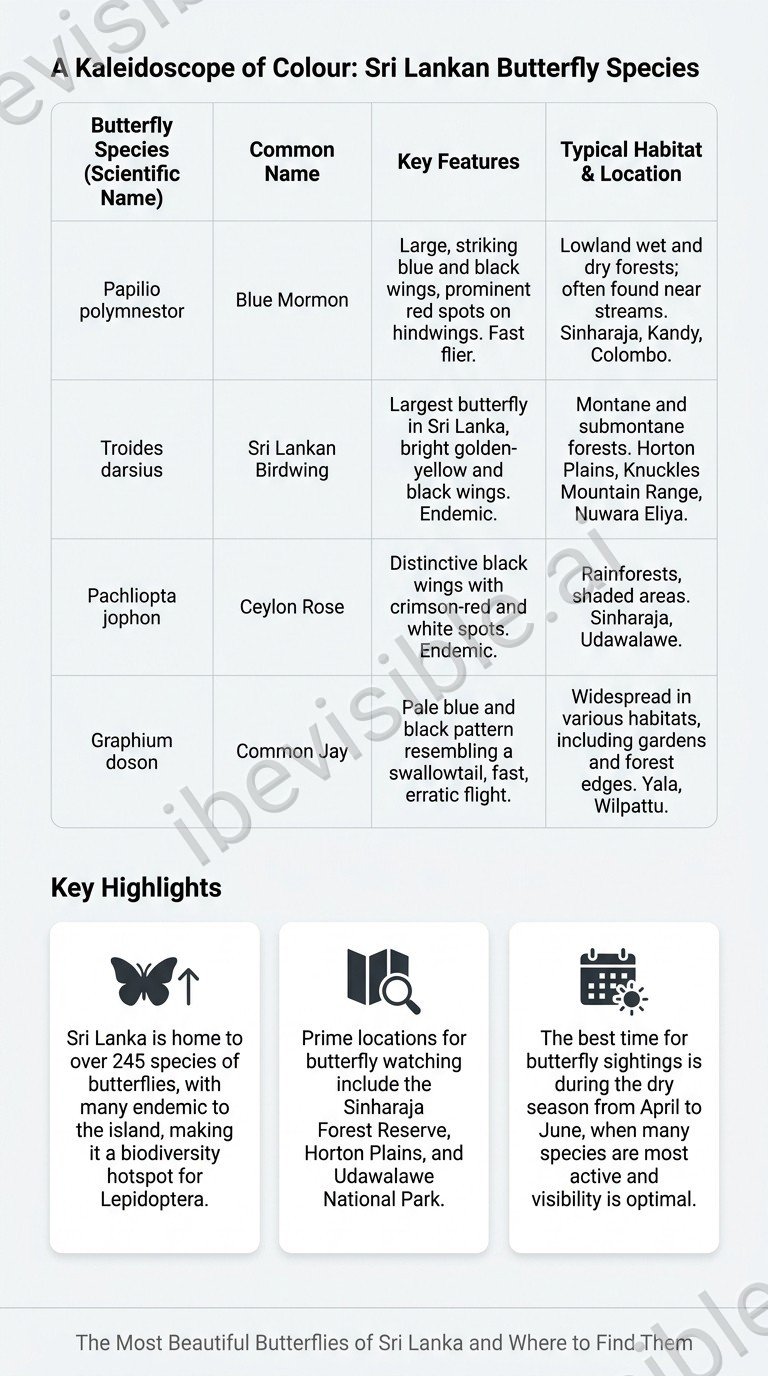

Key Takeaways
- Sri Lanka is home to over 245 species of butterflies, with many endemic to the island.
- Prime locations for butterfly watching include the Sinharaja Forest Reserve, Horton Plains, and Udawalawe National Park.
- The best time for butterfly sightings is during the dry season from April to June.
Key Answer
Sri Lanka is a haven for butterfly lovers, offering over 245 species. Key locations for sightings include Sinharaja Forest Reserve, Horton Plains, and Udawalawe National Park. The best times for butterfly watching are early mornings from April to June.
Sri Lanka, known for its lush landscapes and rich biodiversity, is a paradise for butterfly enthusiasts. The island nation is home to an impressive variety of butterfly species, each more stunning than the last. Exploring the most beautiful butterflies of Sri Lanka and where to find them offers both locals and visitors a unique glimpse into the country’s natural wonders.
A Kaleidoscope of Colour: Sri Lankan Butterfly Species
Sri Lanka boasts over 245 species of butterflies, with around 23 being endemic. These butterflies adorn the island with their vivid hues and striking patterns. Among the most admired are the endemic Sri Lankan Birdwing, the island’s largest butterfly, known for its black and yellow wings, and the Crimson Rose, which flaunts bright red markings on its black wings.
The Common Jezebel, with its distinctive white and yellow wings, and the Blue Mormon, known for its deep blue and black wings, are also frequent sights in Sri Lankan forests. These butterflies thrive in the diverse ecosystems of the country, from lowland rainforests to montane forests, offering an ideal setting for butterfly enthusiasts.
Top Locations for Butterfly Watching
The Sinharaja Forest Reserve, a UNESCO World Heritage site, is perhaps the most well-known location for butterfly watching. This dense rainforest is home to a myriad of butterfly species. Visitors can expect to see the Sri Lankan Birdwing and Blue Mormon fluttering among the trees.
Horton Plains National Park offers a different experience with its highland ecosystem. Here, early morning visitors might catch a glimpse of the Indian Cabbage White and the Common Banded Peacock among the misty landscapes.
Another prime location is the Udawalawe National Park, famous for its elephant population but also a sanctuary for various butterfly species. The park’s open grasslands provide an excellent backdrop for observing butterflies such as the Tawny Coster and the Common Tiger.
Expert Perspective
Wildlife Conservation Specialist
In the realm of wildlife and ecotourism, Sri Lanka stands out for its unique butterfly species and conservation efforts. The island’s commitment to preserving these vibrant insects not only enhances its ecological balance but also boosts tourism, drawing nature enthusiasts from around the globe. In my view, the integration of butterfly watching tours with broader wildlife experiences can offer a deeply enriching and educational journey.
When to Go: The Best Times for Butterfly Sightings
The optimal time for butterfly watching in Sri Lanka is during the dry seasons, particularly from April to June, and again from August to September. During these months, the weather is conducive to butterfly activity, as they thrive in warm, sunny conditions.
Early mornings are ideal for sightings, as butterflies are most active after basking in the morning sun. Visitors should note that different locations may offer better opportunities during specific months, so it is advisable to research conditions and recent sightings when planning a visit.
Conservation Efforts in Sri Lanka
Sri Lanka’s rich biodiversity is supported by various conservation initiatives aimed at preserving its butterfly population. National parks and reserves play a crucial role in maintaining the natural habitats necessary for these species to thrive.
Efforts include habitat restoration and controlled management of forest areas. Educating locals and tourists on the importance of butterflies and their role in the ecosystem is also a key focus of many wildlife organisations. Such initiatives are crucial in ensuring that Sri Lanka remains a butterfly haven for future generations.
How to Plan Your Butterfly Watching Trip
Planning a butterfly watching trip to Sri Lanka requires some preparation. Visitors should consider hiring local guides who are knowledgeable about the best spots and can provide insights into the local wildlife. Tours are available that focus specifically on butterfly watching, offering a curated experience that maximises sightings.
It’s advisable to bring along binoculars and a field guide to identify the various species. Comfortable clothing and sturdy footwear are recommended, especially if trekking through forested areas. Additionally, checking weather forecasts and preparing for variable weather conditions can enhance the overall experience.
Frequently Asked Questions
Some of the most common butterfly species in Sri Lanka include the Sri Lankan Birdwing, Common Jezebel, Crimson Rose, and Blue Mormon.
Yes, there are several guided tours available in Sri Lanka that focus on butterfly watching, often led by local experts who can provide in-depth knowledge.
While butterflies can be seen year-round, the best times for sightings are during the dry seasons from April to June and August to September.
Yes, many wildlife tours in Sri Lanka can be combined with butterfly watching, offering a comprehensive experience of the island’s rich biodiversity.
For an optimal experience, it is recommended to carry binoculars, a field guide, and wear comfortable clothing for trekking in natural habitats.