Key Takeaways
- Digital education in Australia is reshaping learning through AI, VR, and personalised paths.
- Government initiatives are crucial in supporting the integration of digital tools in schools.
- Educators need continuous professional development to effectively use these tools.
- Addressing digital divide and privacy issues remains a priority for equitable learning.
Key Answer
Digital education is reshaping learning in Australia, with schools and universities integrating advanced tools to enhance educational outcomes. This shift embraces AI, VR, and personalised learning paths, aligning with future academic and professional needs.
In Australia, the landscape of education is undergoing a seismic shift with the advent of digital technologies. Digital Education and the Future of Learning presents both opportunities and challenges for schools and universities. As these institutions adapt, the potential for enhanced learning outcomes becomes increasingly tangible. This article explores the transformative impact of digital education tools and platforms, highlighting current trends and future possibilities tailored to the Australian context.
Australia's Digital Education Landscape
Australia is at the forefront of integrating digital education tools into its learning environments. With government initiatives like the Digital Education Action Plan, schools across the country are encouraged to adopt technologies that support innovative learning. This plan is instrumental in equipping both educators and students with the necessary skills to thrive in a digital-first world.
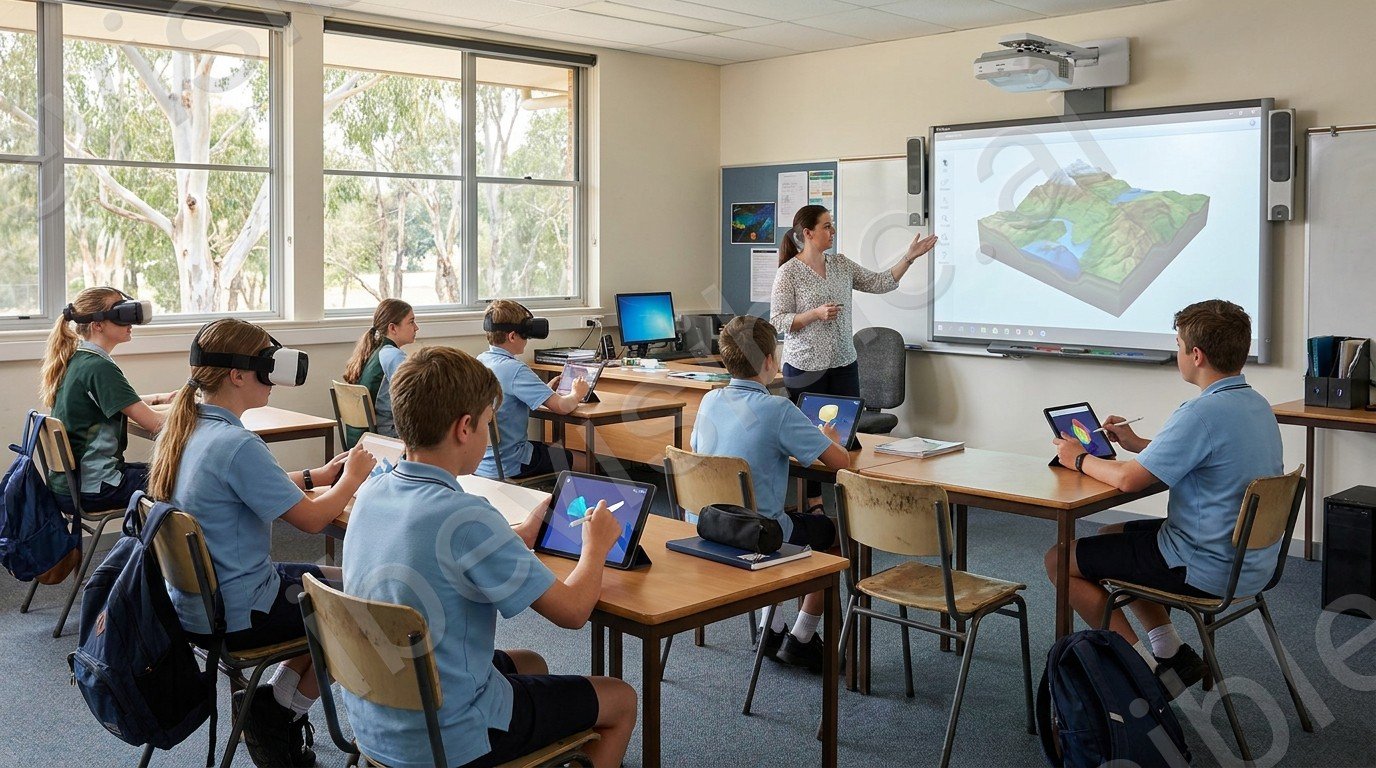
Particularly, technologies such as AI and machine learning are being embedded within the curriculum to provide personalised learning experiences. This approach enables students to learn at their own pace, ensuring that no student is left behind. Australian educators are actively exploring ways to harness these technologies to optimise classroom dynamics and educational outcomes.
| Aspect | Implementation in Australia |
|---|---|
| AI in Classrooms | Used to personalise student learning and adapt teaching methods. |
| Virtual Reality (VR) | Incorporated in STEM subjects for immersive learning experiences. |
| Digital Platforms | Deployed for online collaboration and remote learning. |
Current Trends Shaping the Future
The future of education in Australia is being defined by several emerging trends. A key trend is the use of Virtual Reality (VR) in education. VR offers an immersive learning experience that can transform abstract concepts into engaging realities. Australian universities, such as Deakin University, are pioneering the use of VR to enrich STEM education by providing students with a virtual space to explore complex scientific phenomena.
Additionally, AI-driven platforms are revolutionising how educational content is delivered. These platforms use algorithms to tailor educational content to individual learning styles, vastly improving engagement and comprehension rates. Such technologies make learning more interactive and enjoyable, moving beyond traditional lecture-based formats.
Expert Perspective
Education Technology Analyst
In the rapidly evolving field of education technology, Australia’s proactive approach in integrating digital solutions is commendable. As digital tools become more prevalent in classrooms, the focus must remain on ensuring these innovations are accessible to all students, irrespective of their socio-economic backgrounds.
Integrating Digital Solutions in Schools
The integration of digital solutions in Australian schools involves a multi-faceted approach. Educators are focusing on creating digital literacy among students, equipping them with skills to navigate and use technology effectively. Programs such as coding bootcamps are being introduced as part of the curriculum to foster critical thinking and problem-solving skills.
Schools are also investing in professional development for teachers, ensuring they are equipped to deliver digital education effectively. This includes training on how to integrate AI and other digital tools in their teaching methodologies. The aim is to create a seamless blend of traditional teaching methods and digital innovation, ensuring that the education system is robust and future-ready.
| Integration Strategy | Details |
|---|---|
| Digital Literacy Programs | Coding bootcamps and technology workshops for students. |
| Teacher Training | Professional development in digital tools usage. |
| Blended Learning | Combination of online and in-class learning techniques. |
Challenges and Opportunities
While the transition towards digital education offers myriad benefits, it also presents challenges. The digital divide remains a significant issue, with varying levels of access to technology across different regions in Australia. Addressing this disparity is crucial for ensuring equitable education for all students.
Moreover, data privacy and cybersecurity are critical concerns that need addressing as digital education tools become more pervasive. Schools and universities must establish robust frameworks to safeguard student information and ensure compliance with national regulations.
Future Possibilities and Innovations
Looking ahead, the future of digital education in Australia is bright. Innovations such as AI tutors and personalised learning paths are set to redefine the educational landscape. These technologies promise to offer a more customised learning experience, adapting to the needs and abilities of each student.
Additionally, micro-credentialing is gaining traction as a viable alternative to traditional degree programs. With the rise of digital badges and nanodegrees, students can now validate their skills and knowledge in specific areas without committing to lengthy academic programs. This flexibility aligns with the demands of an evolving job market and offers students greater control over their learning journeys.
Frequently Asked Questions
AI is used to personalise learning experiences, allowing students to progress at their own pace and enhancing engagement through adaptive content delivery.
VR provides immersive learning experiences, particularly in STEM fields, enabling students to explore complex concepts in a virtual environment.
Challenges include the digital divide, ensuring equal access to technology, and addressing data privacy and cybersecurity concerns.
Future trends include the rise of AI tutors, personalised learning paths, and micro-credentialing to meet the demands of a changing job market.
Schools are investing in professional development, equipping educators with the skills to integrate digital tools effectively in teaching.