Key Takeaways
- Emerging skills like financial intelligence and AI literacy are crucial for today’s job market.
- Universities should focus on integrating practical skill modules to bridge the existing gap.
- Workplace dynamics and personal branding are essential for career success but are often neglected in curricula.
Key Answer
Explore ‘Episode 9 — The Skills Universities Don’t Teach Yet’ to understand the essential skills missing from university curricula that are critical for career readiness in today’s evolving job market.
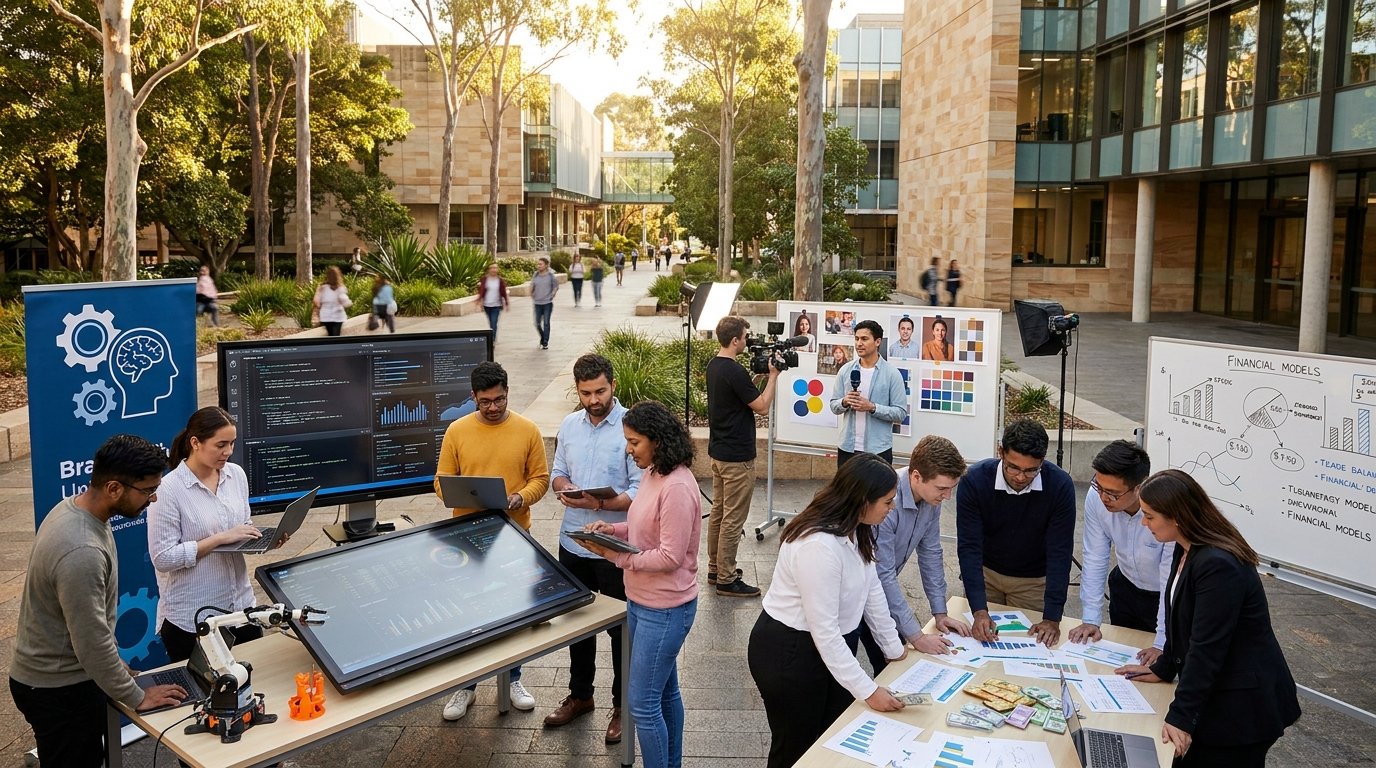
In “Episode 9 — The Skills Universities Don’t Teach Yet”, the focus turns to an increasingly pressing issue: the disconnect between university curricula and the emerging skills vital for today’s job market. As the employment landscape evolves, universities must pivot to better prepare graduates, equipping them with competencies that traditional academic structures often overlook.
The Gap in University Curricula
Universities in Australia and worldwide have long been the bastions of higher learning, providing students with knowledge across various disciplines. However, as the job market adapts to new technological and societal demands, there is a noticeable gap between what is taught and what is needed. Traditional degree programs often focus on theoretical knowledge but tend to overlook practical skills crucial for navigating modern workplaces. This gap leaves graduates ill-equipped to handle real-world challenges effectively.
Practical Financial Intelligence
One of the most critical yet overlooked areas in university education is practical financial intelligence. While courses in economics and business studies cover the basics, they often fail to teach students about real-world financial management. Understanding tax optimisation, superannuation strategies, and investment planning is crucial for financial independence and stability. Universities could integrate workshops and practical modules that focus on these aspects, preparing students to manage their finances effectively once they enter the workforce.
Expert Perspective
Education Strategist
In my capacity as an education strategist, I’ve observed that universities lag in updating their curricula to reflect real-world demands. Prioritising emerging skills such as AI literacy and financial intelligence will not only enhance graduates’ readiness but also increase their employability and adaptability in evolving job markets.
AI Literacy and Prompt Engineering
In the age of artificial intelligence, AI literacy has become indispensable. It’s not just about understanding AI concepts but mastering the tools and techniques, like prompt engineering, that enhance productivity. As highlighted by METR research, while AI tools can increase efficiency, the real challenge lies in effectively implementing these tools to achieve significant productivity gains. Universities could incorporate AI literacy into their curricula by offering modules that focus on practical AI applications, enabling students to integrate AI tools seamlessly into their workflows.
Navigating Workplace Dynamics
Interpersonal dynamics and workplace politics are often termed as the ‘hidden curriculum’ of professional life. Graduates entering the workforce are frequently unprepared for the complexities of corporate hierarchies, conflict resolution, and the necessity of emotional intelligence. Universities can bridge this gap by offering courses that address these skills explicitly, perhaps through role-playing scenarios or collaborations with industry experts to simulate real-world workplace situations.
Building a Personal Brand
In today’s digital age, a strong personal brand can set graduates apart. Universities should encourage students to develop their personal brand from early on. This involves understanding how to build a professional online presence and leverage platforms like LinkedIn to establish authority in their chosen field. By incorporating personal brand development into their programs, universities can help students differentiate themselves in a competitive job market.
Mental Resilience and Burnout Prevention
With increasing demands in professional environments, mental resilience and burnout prevention are paramount. Universities often overlook these aspects, yet they are crucial for long-term career sustainability. Programs that focus on stress management techniques, time management, and work-life balance could be integrated into curricula to better prepare students for the pressures of the working world.
Frequently Asked Questions
Emerging skills often evolve faster than academic curricula can adapt. Universities traditionally focus on theoretical knowledge, which can leave practical, current skills underrepresented.
Universities can introduce workshops, practical modules, and partnerships with industry leaders to incorporate these skills into their existing curricula.
AI literacy is crucial as it helps individuals effectively use AI tools to increase productivity and streamline processes in modern workplaces.
A strong personal brand helps graduates differentiate themselves in a competitive job market, showcasing their expertise and connecting with potential employers.
Students can develop practical financial intelligence through workshops, internships, and courses focused on real-world financial management, covering topics like tax optimisation and investment planning.