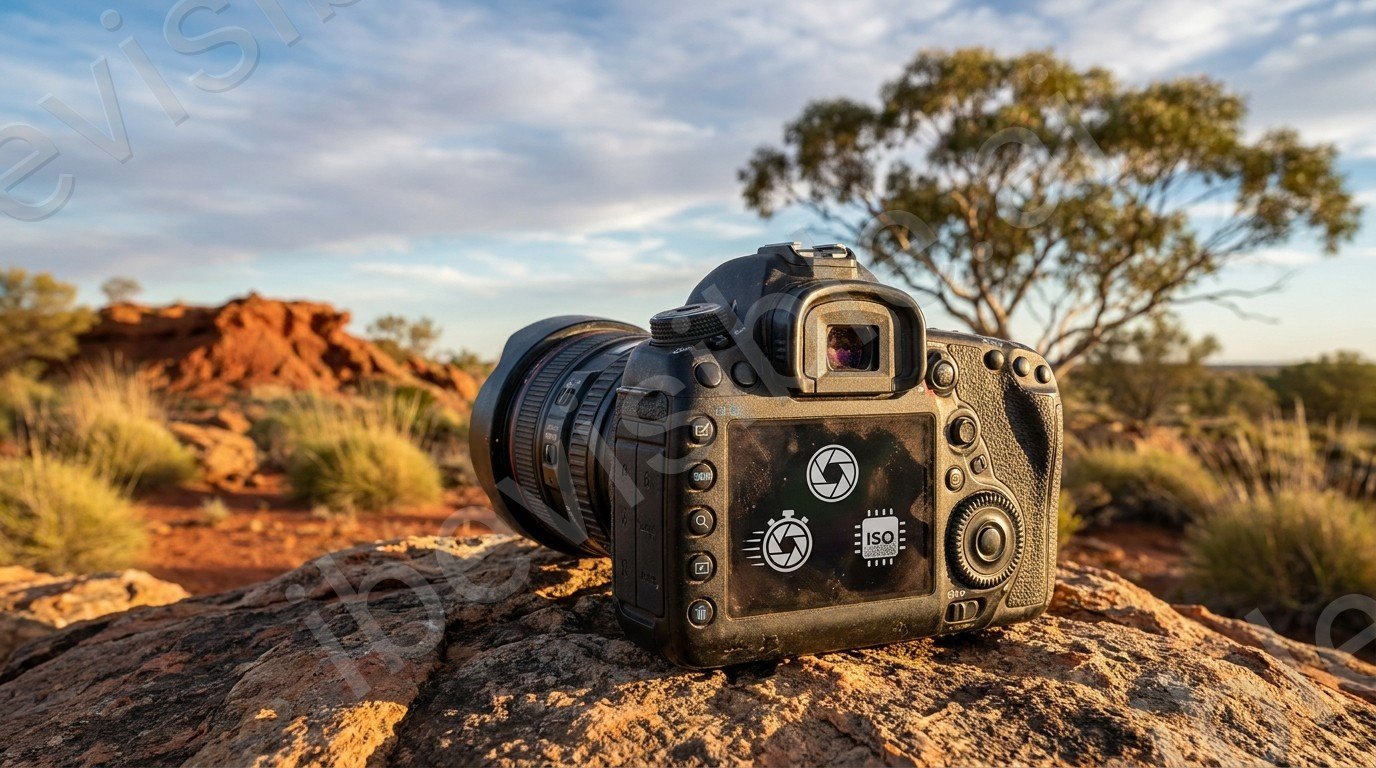

Key Takeaways
- The exposure triangle is vital for controlling the light and quality of photographs.
- Aperture, shutter speed, and ISO must be balanced for optimal exposure.
- Tools like histograms and metering modes can guide photographers in achieving the right exposure.
- Understanding the triangle empowers photographers to creatively and technically manage their shots.
Key Answer
The exposure triangle in photography is a balance of three elements: aperture, shutter speed, and ISO. Each affects a photo’s exposure, depth, and clarity, crucial for well-lit images.
In the world of photography, mastering the art of exposure is essential. Understanding the Exposure Triangle: Aperture, Shutter Speed, and ISO Made Simple is the key to unlocking the potential of your camera and capturing well-exposed images. This concept is fundamental for beginners who aspire to take control of their photographic outcomes.
The exposure triangle is a simple yet powerful framework that guides photographers in balancing these three crucial elements: aperture, shutter speed, and ISO. Each component plays a vital role in determining the overall exposure of a photograph, affecting its brightness, depth, and quality. By understanding and manipulating these settings, photographers can take stunning pictures, whether they are exploring the rugged Outback or capturing urban scenes in Sydney.
Decoding the Exposure Triangle
The exposure triangle is the core framework for understanding how to adjust and balance exposure settings in photography. These settings–aperture, shutter speed, and ISO–work in harmony to control the amount of light reaching the camera’s sensor.
Aperture refers to the size of the lens opening through which light enters the camera. It is measured in f-stops, with a lower f-stop (e.g., f/2.8) meaning a larger aperture that lets in more light, and a higher f-stop (e.g., f/16) indicating a smaller aperture that allows less light. The aperture setting influences the depth of field, which is the range of distance in a scene that appears acceptably sharp.
Shutter speed is the length of time the camera’s shutter is open to allow light to hit the sensor. Fast shutter speeds (e.g., 1/1000s) freeze motion and are ideal for sports or wildlife photography. In contrast, slow shutter speeds (e.g., 1/30s) can introduce motion blur, which might be used artistically for capturing movement like flowing water.
ISO measures the sensitivity of the camera sensor to light. Lower ISO values (e.g., ISO 100) produce clearer images with less noise but require more light. Higher ISO settings (e.g., ISO 3200) are useful in low-light conditions but can introduce digital noise, affecting image quality.
Why Balance is Essential
Balancing the exposure triangle is crucial because each setting affects the others, and changes to one require adjustments to the others to maintain the desired exposure level.
For instance, if one chooses a smaller aperture for a deep depth of field, they may need to use a slower shutter speed or increase the ISO to compensate for the reduced light. This balancing act enables photographers to achieve the right exposure while meeting their artistic or practical goals.
Imagine shooting in the Kakadu National Park, where capturing both the intense detail of the wetlands and the vibrant colours of a sunset requires precise control over the exposure settings. Mastering this balance can elevate the quality of photographs and ensure each image tells a compelling story.
Expert Perspective
Photography Education Specialist
In the competitive field of photography, understanding the exposure triangle is akin to learning a new language. Mastery of this concept enables photographers not only to capture technically sound images but also to express their creative visions more fully. With advancements in camera technology, having a strong foundation in these basics sets photographers apart in achieving both consistency and artistry in their work.
Leveraging Auto-ISO and Exposure Compensation
Modern digital cameras have advanced automation features like Auto-ISO and exposure compensation, which help photographers manage exposure settings more effectively. Auto-ISO adjusts the ISO automatically based on the lighting conditions and the chosen aperture and shutter speed settings.
Exposure compensation allows photographers to adjust the exposure level specified by the camera’s light meter, which can sometimes misinterpret a scene, especially in challenging lighting conditions like backlit portraits or high-contrast settings. By understanding how to use these features, photographers can make quick adjustments on the fly without losing the creative control necessary for achieving their vision.
Consider using these tools when photographing in dynamic environments such as bustling city streets or under the ever-changing light of Melbourne’s unpredictable weather.
Understanding the Histogram
A histogram is a graphical representation of the tonal values of an image. It is an essential tool for photographers to verify exposure, ensuring that no details are lost in highlights or shadows. The histogram displays the distribution of tones from black (left) to white (right).
By analysing the histogram, photographers can understand if an image is properly exposed or if adjustments are needed. A well-balanced histogram typically shows a nice spread across the graph without excessive clipping at either end.
In practice, when capturing landscapes along the Great Ocean Road, referring to the histogram can help avoid overexposed skies or underexposed shadow areas, ensuring that the photograph retains its full range of detail and colour richness.
Prioritising Settings with Scenario-Based Decision Trees
For beginners, knowing which setting to prioritise can be challenging. Scenario-based decision trees provide a logical approach to make these decisions.
For example, when capturing fast-moving subjects like athletes at a Sydney marathon, prioritising shutter speed to freeze motion is critical. Conversely, when focusing on portraits, selecting an appropriate aperture to achieve a pleasing depth of field takes precedence.
Creating decision trees tailored to specific photographic scenarios not only simplifies the shooting process but also enhances the ability to achieve the desired creative outcome.
Navigating Metering Modes
The camera’s metering modes assess the brightness of a scene to suggest optimal exposure settings. Understanding these modes is crucial for achieving accurate exposure in various lighting conditions.
Evaluative metering (or matrix metering) considers the entire scene, making it suitable for balanced lighting scenarios. Centre-weighted metering prioritises the central area, while spot metering focuses on a small point, ideal for backlit subjects or high-contrast scenes.
By mastering metering modes, photographers can better control exposure, particularly in Australia’s varied environments, from the sun-drenched beaches of the Gold Coast to the shadowy rainforests of Queensland.
Frequently Asked Questions
The exposure triangle is a fundamental concept in photography that involves balancing three settings: aperture, shutter speed, and ISO, to achieve proper exposure in photographs.
Aperture controls the depth of field, shutter speed affects motion capture, and ISO determines sensitivity to light. Together, they balance exposure, affecting image brightness and clarity.
A histogram is a graphical representation of an image’s tonal values, helping photographers assess exposure levels to ensure no details are lost in highlights or shadows.
Mastering the exposure triangle allows beginners to take control over their camera settings, leading to better composed and exposed photographs.
Yes, features like Auto-ISO and exposure compensation assist in managing exposure settings, but understanding the exposure triangle is essential for creative control.