
Key Takeaways
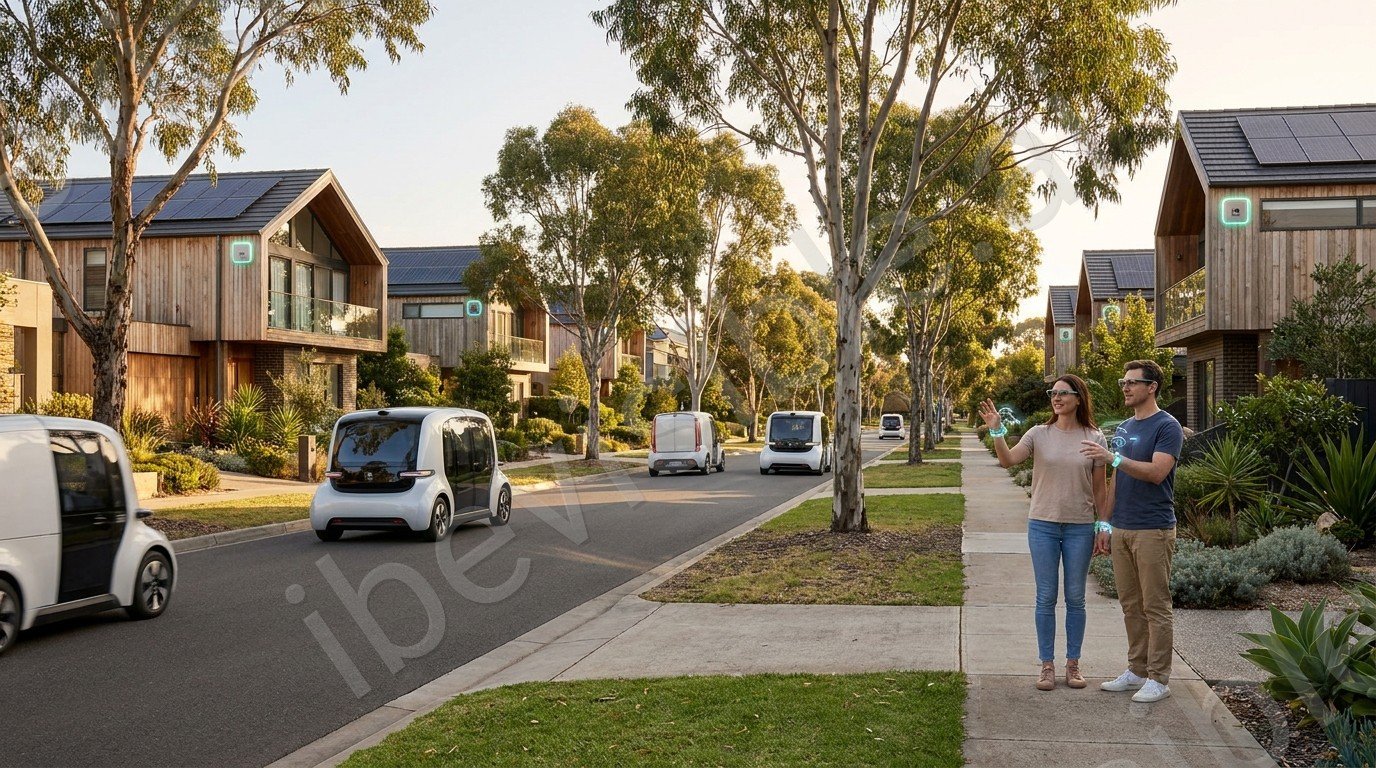
- AI is transforming Australian homes through smart technologies that improve efficiency and sustainability.
- AI healthcare innovations in Australia enhance diagnostics and facilitate proactive health management.
- AI-driven transportation projects in Australia aim to reduce congestion and improve safety.
- Spatial computing and Edge AI provide immersive experiences and enhance real-time data processing.
Key Answer
AI technologies are reshaping Australian daily life with advancements in smart homes, healthcare, and transport, fostering efficiency and innovation across the country.
The future of AI promises significant changes to everyday life, especially in Australia where innovative technologies are being adopted at a rapid pace. From smart home devices that anticipate your needs to healthcare systems enhanced by AI, the impact is profound and growing. This article delves into these emerging technologies, highlighting local initiatives and their transformative potential.
AI Transforming Australian Homes
In Australian households, smart home devices are quickly becoming a staple. These devices utilise AI to streamline daily tasks, enhance security, and improve energy efficiency. Products such as the Google Nest Hub are increasingly common, allowing users to control home environments through voice commands or even automatically, based on learned behaviours.
Smart homes in Australia often incorporate solar panels and battery storage systems, integrating seamlessly with AI to optimise energy consumption. Such systems can predict energy needs based on past usage and weather forecasts, significantly reducing costs and carbon footprints. The CSIRO, Australia’s national science agency, is heavily involved in advancing these technologies, ensuring they are tailored to local conditions.
Revolutionising Healthcare with AI
Healthcare in Australia is on the cusp of a revolution, driven by AI. The use of AI in diagnostics is one of the most promising areas, with technologies capable of analysing medical images with greater accuracy and speed than traditional methods. AI-powered platforms like IBM Watson Health are already in use to assist doctors in diagnosing complex cases by suggesting potential treatments based on vast datasets.
AI wearables are also gaining traction, providing real-time health monitoring and predictive diagnostics. These devices can alert users and healthcare providers to potential health issues before they become critical, thus enhancing preventive care. Australian research institutions are at the forefront of developing these wearables, ensuring they meet the specific needs of the population.
Expert Perspective
AI Technology Expert
The integration of AI into daily life in Australia is not merely a technological shift but a cultural one. As Australians become more accustomed to AI technologies, the focus should increasingly be on ethical implementation and ensuring these advancements align with societal values and privacy concerns.
The Future of AI in Transportation
Transportation across Australia is being revolutionised by AI, promising increased efficiency and safety. Autonomous vehicles, once a futuristic concept, are now being trialled on Australian roads. These vehicles use AI to navigate, making real-time decisions based on traffic data and environmental conditions. Companies like Tesla and local innovators are leading these trials, supported by government initiatives keen on reducing urban congestion and emissions.
AI also plays a crucial role in public transport systems. Smart algorithms optimise routes and schedules to minimise wait times and improve commuter experience. Projects like the Sydney Metro, Australia’s largest public transport project, are incorporating AI to manage train operations, aiming for a safer and more reliable service.
AI in Spatial Computing and Edge AI
Spatial computing is another domain where AI is making significant strides. This technology blends the digital and physical worlds, using augmented reality (AR) and virtual reality (VR) to create interactive environments. In Australia, this is being explored for education and training, offering immersive learning experiences that enhance understanding and retention.
Edge AI, meanwhile, is shifting processing from the cloud to local devices, improving privacy and reducing latency. This decentralisation is pivotal for applications that require real-time decision-making, such as autonomous drones or real-time translation devices. Local startups are actively exploring these applications, providing a robust testing ground for these cutting-edge technologies.
Neurotechnology: The Next Frontier
Neurotechnology represents the next frontier in AI, aiming to bridge the gap between human cognition and machines. This includes non-invasive brain-computer interfaces (BCIs) that allow users to interact with digital devices using their thoughts. Research in Australia is contributing to these advancements, particularly in areas that aid communication for individuals with disabilities.
Such technologies hold the potential to radically enhance accessibility and user interaction, offering new avenues for communication and control. The University of Melbourne, for instance, is at the forefront of BCI research, developing devices that could soon become mainstream, opening up a plethora of opportunities for innovation and personalisation.
Frequently Asked Questions
AI is integrating into Australian homes through smart devices that enhance efficiency, security, and energy management, often utilising solar and battery systems.
AI improves diagnostics and preventive care through advanced imaging analysis and wearable health monitoring, contributing significantly to better health outcomes.
Yes, autonomous vehicles are being trialled in Australia, with AI assisting in navigation and decision-making to enhance safety and efficiency.
Spatial computing involves AR and VR technologies to blend digital and physical worlds, used in education and training to create immersive learning environments.
Edge AI is used in autonomous systems and real-time decision-making devices, shifting processing from cloud to local for better performance and privacy.