
Key Takeaways
- Master Scheduling is essential for reducing missed appointments and optimising practice efficiency.
- Behavioural psychology can effectively enhance patient engagement and adherence to appointments.
- Predictive analytics identifies high-risk appointments, allowing proactive intervention.
- Dynamic waitlist automation maximises slot utilisation and minimises revenue loss.
Key Answer
Master Scheduling is key to reducing missed appointments by integrating data analytics, behavioural psychology, and dynamic waitlists to improve patient engagement and predict no-show risks.
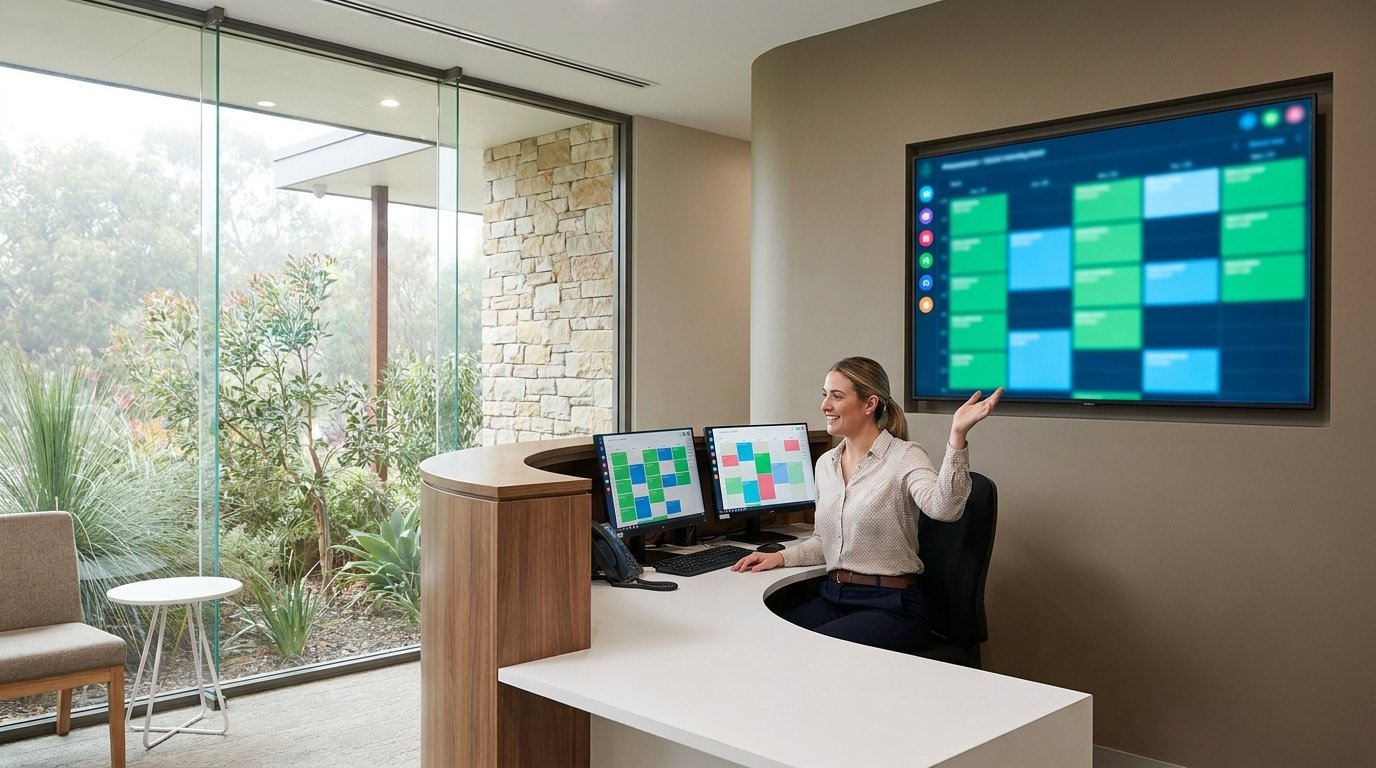
Master Scheduling is revolutionising how medical and service-based practices reduce missed appointments. By leveraging advanced analytics and behavioural psychology, these systems significantly enhance scheduling efficiency and patient engagement. This article explores the strategic adoption of Master Scheduling and its profound impact on reducing no-shows, enhancing operational productivity, and boosting financial performance.
Understanding Master Scheduling
Master Scheduling refers to an integrated system that goes beyond traditional scheduling methods. By utilising predictive analytics, it forecasts potential no-shows based on historical data and demographic insights. This approach allows practices to tailor their reminder systems, enhancing patient accountability and reducing the likelihood of missed appointments.
Leveraging Behavioural Psychology in Reminders
One of the critical innovations in Master Scheduling is the application of behavioural psychology to appointment reminders. Techniques such as loss aversion and social proof are embedded within communication scripts to increase patient adherence to scheduled slots. For instance, reminding patients of the financial and personal value of their appointments can reinforce commitment.
Practices can provide downloadable communication scripts for staff, ensuring consistent and effective messaging. These scripts should be designed to trigger emotional and cognitive responses that motivate patients to honour their appointments.
Expert Perspective
Healthcare Systems Strategist
Incorporating Master Scheduling into practice operations is not just a tactical move but a strategic investment that can transform patient management and revenue cycles. By focusing on proactive engagement and data-driven decision making, practices can significantly enhance their efficiency and patient satisfaction.
Predictive Analytics for High-Risk Identification
Predictive analytics is a powerful tool within Master Scheduling, allowing practices to flag high-risk appointments with a potential no-show. By analysing data such as patient history, demographics, and past appointment behaviours, scheduling systems can preemptively identify and address these risks.
This proactive approach involves adjusting appointment schedules, reinforcing reminder systems, or offering incentives for attendance. Such tactics not only reduce no-shows but also improve patient satisfaction by demonstrating a personalised approach to care.
Dynamic Waitlist Automation
Dynamic waitlists are a core component of Master Scheduling. They automate the process of filling cancellations by instantly alerting patients on an ‘ASAP’ list. This reduces the need for manual intervention by staff and ensures that every available slot is efficiently utilised.
By automating waitlist management, practices can significantly decrease revenue leakage and improve operational efficiency. Dynamic systems can also offer patients real-time updates, enabling them to seize last-minute appointment opportunities seamlessly.
Financial Benefits of No-Show Reduction
Reducing missed appointments not only optimises scheduling but also has a significant financial impact. Practices can calculate the return on investment (ROI) of no-show reduction by considering factors such as overhead costs, missed revenue, and lost lifetime value of patients.
Implementing a comprehensive Master Scheduling system allows for detailed financial tracking and ROI calculation. Practices can measure the success of their strategies through metrics such as increased patient retention and reduced administrative burden.
| Metric | Impact | Financial Benefit |
|---|---|---|
| Patient Retention | Improved | Increased revenue from consistent appointments |
| Administrative Efficiency | Enhanced | Reduced need for manual rescheduling |
| Operational Costs | Lowered | Decreased overhead from unoccupied slots |
Front-Desk Communication Enhancements
Effective front-desk communication is essential for minimising missed appointments. Master Scheduling supports this through specific verbal frameworks and templates that staff can use to handle cancellations efficiently, ensuring immediate rebooking.
Staff training programs can incorporate these templates, teaching effective communication techniques that promote patient engagement and adherence. This enhances the practice’s professionalism and fosters stronger patient relationships.
The Role of Technology in Master Scheduling
Technology plays a pivotal role in implementing a successful Master Scheduling system. From electronic health records integration to mobile app notifications, technology provides the infrastructure needed for seamless appointment management.
Practices can also explore self-scheduling tools that allow patients to book or reschedule their appointments online, offering greater flexibility and reducing the administrative load on staff. Additionally, secure patient portals can facilitate communication, providing reminders and updates directly to the patient’s devices.
Frequently Asked Questions
Master Scheduling is a comprehensive system integrating predictive analytics and behavioural psychology to reduce missed appointments and enhance scheduling efficiency.
Behavioural psychology can enhance reminder effectiveness by using psychological triggers like loss aversion and social proof to increase patient adherence to appointments.
Reducing missed appointments improves patient retention, lowers operational costs, and enhances administrative efficiency, leading to increased revenue.
Dynamic waitlist automation instantly alerts patients on a standby list when cancellations occur, ensuring efficient slot utilisation without manual intervention.
Technologies include electronic health records, mobile app notifications, and self-scheduling tools for streamlined appointment management.