Share this article

Table of Contents

Mastering Fire Drill Awareness: A Comprehensive Guide

Mastering Fire Drill Awareness: A Comprehensive Guide

Key Takeaways

  • Fire Drill Awareness is vital for ensuring safety during emergencies.
  • Inclusive safety protocols are essential for individuals with disabilities.
  • Advanced drills prepare teams for complex scenarios.
  • Remote workers should integrate fire safety into their routines.

Key Answer

Fire Drill Awareness involves understanding and executing effective evacuation protocols to ensure safety during emergencies, crucial for all workplaces, including remote setups.

In today’s fast-paced and ever-evolving workplace environment, Fire Drill Awareness is not just a regulatory requirement but a critical component of organisational safety culture. Recognising potential hazards and understanding the correct evacuation procedures can make the difference between safety and chaos. This guide delves into the nuances of fire drill protocols, shedding light on advanced strategies that cater to both traditional office settings and the growing remote workforce.

The Essence of Fire Drill Awareness

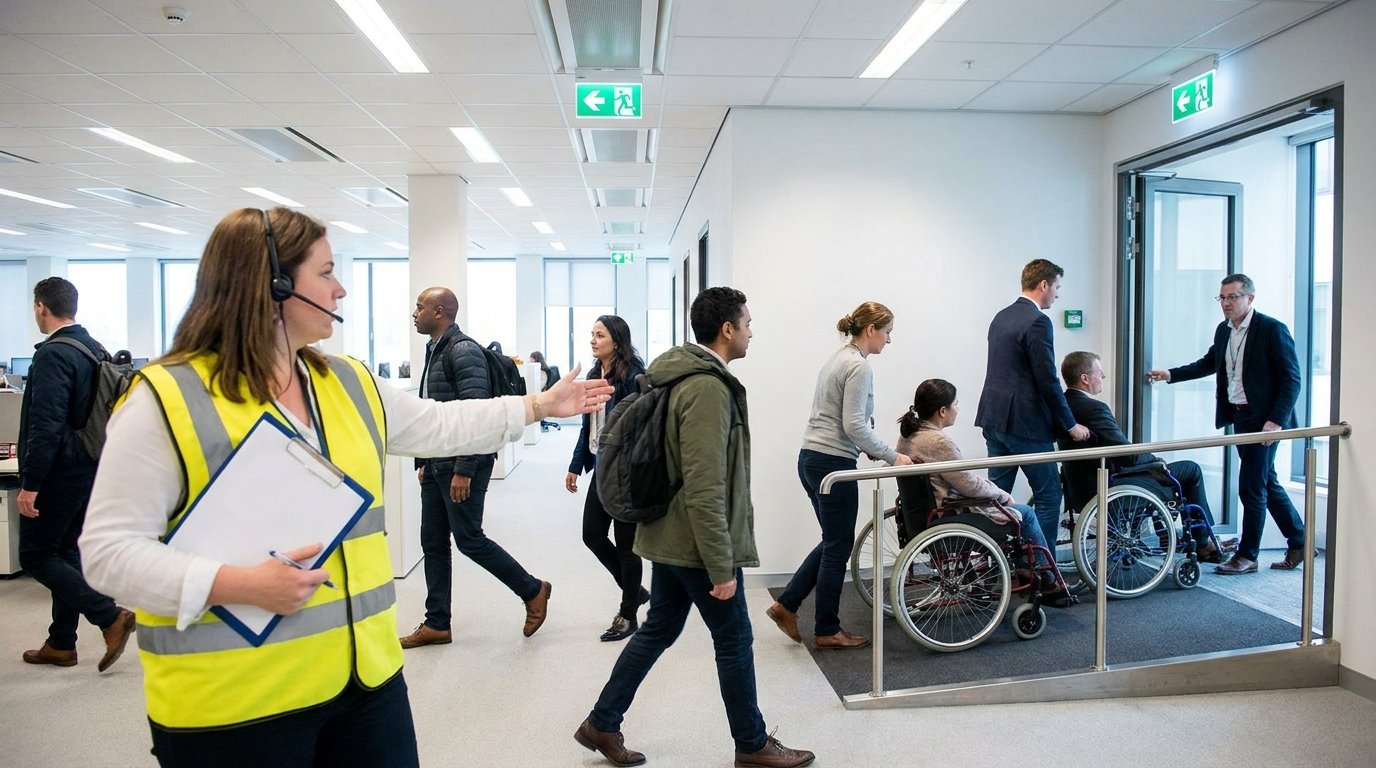
Fire Drill Awareness is about more than just reacting to a blaring alarm. It encompasses a comprehensive understanding of emergency evacuation routes, assembly points, and the roles of designated fire wardens. The primary aim is to instil a culture of preparedness, ensuring all staff members know their responsibilities and the steps to take in case of an emergency.

Key to this is the regular scheduling of fire drills, which helps to assess and enhance the efficiency of evacuation plans. Through these exercises, organisations can identify bottlenecks, improve response times, and ensure that everyone, regardless of mobility, can evacuate swiftly and safely.

Inclusive Safety Protocols

Incorporating inclusive safety protocols is vital to ensuring the safety of all individuals within a workplace. This means acknowledging and planning for the needs of individuals with mobility, visual, or auditory disabilities. An effective method is establishing an ‘Evacuation Buddy’ system, where each person with a disability is paired with a colleague responsible for assisting them during an evacuation.

Organisations are encouraged to include specific training for these scenarios in their regular fire drills. By doing so, they foster an environment where every team member knows how to offer appropriate assistance, ensuring that no one is left behind in an emergency.

Expert Perspective

Safety Protocol Consultant

Fire Drill Awareness requires a modern approach that integrates psychological preparedness and tailored protocols for remote workers. It’s not just about compliance but about cultivating a culture of readiness and inclusivity.

Advanced Drill Scenarios

To truly master Fire Drill Awareness, it is essential to go beyond basic evacuation exercises. Advanced drill scenarios, such as simulating blocked exits or conducting drills during power outages, provide a more realistic and challenging environment. These scenarios help staff remain calm and composed under pressure, refining their problem-solving skills.

It’s also beneficial to conduct after-hours response testing to prepare for emergencies that occur outside regular work hours. This ensures that night shift workers or those working overtime have the same level of preparedness as their day-shift counterparts.

Fire Safety for Remote and Hybrid Workforces

The surge in remote and hybrid work arrangements necessitates tailored fire safety strategies. Employees working from home should be encouraged to establish and routinely practice a fire drill specific to their home environment. This could include identifying two safe exit paths and knowing the location of fire extinguishers and smoke alarms.

For companies, integrating remote work fire drill checklists into corporate safety policies ensures that all employees, irrespective of their work location, maintain a high level of fire safety awareness. These measures not only protect individuals but also uphold the company’s commitment to comprehensive safety practices.

Psychological Preparedness in Fire Drills

Beyond physical readiness, psychological preparedness is a crucial aspect of Fire Drill Awareness. This involves training to overcome the ‘normalcy bias’, where individuals downplay the severity of an emergency, and the ‘freeze response’, a natural reaction where decision-making can stall under stress.

Regular training can help instil the instinctive reactions needed to evacuate swiftly and efficiently. Incorporating behavioural psychology into fire drill protocols can dramatically improve individual and collective responses, ultimately reducing panic and confusion during real emergencies.

Post-Drill Analytics and Metrics

After-action reviews and analytics are essential for evaluating the success of fire drills. Collecting data on response times, participation rates, and evacuation efficiency can help organisations pinpoint areas needing improvement.

Key performance indicators (KPIs) such as department-specific response rates and exit route distribution are valuable metrics. These insights allow for the fine-tuning of protocols, ensuring that future drills are more effective and that actual emergencies are managed with utmost efficiency.

Frequently Asked Questions

Fire drills are crucial for preparing individuals to respond effectively during an emergency, ensuring swift and safe evacuation from the premises.

It is recommended that fire drills be conducted at least annually, though more frequent drills may be beneficial depending on organisational needs and risk assessments.

An ‘Evacuation Buddy’ is a designated individual who assists a person with disabilities during an evacuation to ensure their safety.

Remote workers should establish home fire safety routines, including regular checks of smoke alarms and creating a home evacuation plan.

Metrics such as response times, evacuation efficiency, and participation rates are crucial for assessing and improving fire drill effectiveness.