Share this article

Table of Contents

Beyond Testing: My Career Transition from QA to Project Management

Beyond Testing: My Career Transition from QA to Project Management

Key Takeaways

  • QA skills provide a strong foundation for a transition to Project Management.
  • The transition offers broader career opportunities, including leadership and strategic roles.
  • Overcoming communication and perception challenges is crucial for success.

Key Answer

Explore how transitioning from QA to PM is not just a career shift but an evolution, utilizing QA skills to excel in Project Management roles.

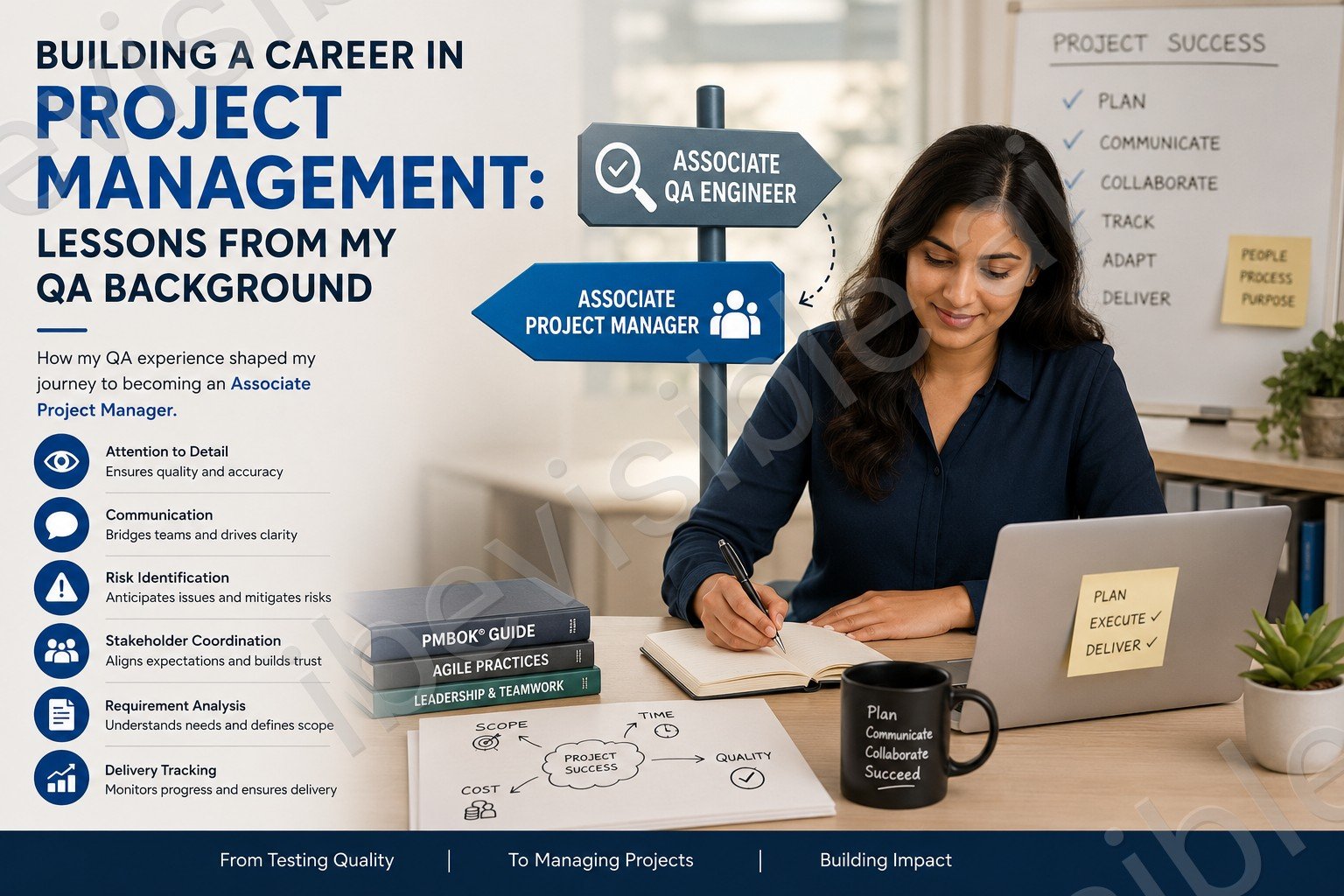
Transitioning from Quality Assurance (QA) to Project Management (PM) is a journey filled with opportunities and challenges. “Beyond Testing: My Career Transition from QA to Project Management” delves into this transformative experience, highlighting how a strong foundation in QA can be leveraged for success in PM.

The QA Foundation: A Springboard to Project Management

The field of Quality Assurance serves as an excellent springboard into Project Management. The skills honed in QA, such as attention to detail, analytical thinking, and problem-solving, are invaluable in a PM role. QA professionals are adept at identifying risks, a skill that directly translates to risk management in projects. Their experience with test planning and execution informs their ability to plan and oversee project timelines effectively.

In QA, professionals cultivate a strong understanding of product life cycles and stakeholder needs. This knowledge is crucial for PMs, who must balance technical deliverables with strategic goals. Moreover, the collaborative nature of QA work, which involves liaising with developers and stakeholders, mirrors the communication demands of PM roles.

Why Move Beyond QA?

The decision to transition from QA to PM is often driven by a desire for broader responsibility and greater impact on projects. While QA plays a critical role in ensuring product quality, PM offers a broader scope by influencing project direction, strategy, and resource allocation.

For many professionals, the appeal lies in the challenge and diversity that PM roles offer. Project Managers engage with every aspect of a project, from inception to completion, providing a platform to effect change and drive innovation. This transition also aligns with personal growth goals, offering opportunities for leadership and decision-making that are more limited in QA roles.

Expert Perspective

IT Career Transition Specialist

In today’s fast-evolving tech landscape, the ability to pivot careers while leveraging existing expertise is invaluable. Transitioning from QA to Project Management exemplifies this adaptive capability, enabling professionals to grow beyond traditional boundaries and contribute more significantly to their organisations.

Learning the Project Management Mindset

Acquiring a Project Management mindset requires a shift from a focus on quality assurance to an emphasis on strategic planning and execution. This transition demands new skills such as scope management, budgeting, and resource allocation. Understanding these elements is key to managing projects effectively and ensuring successful outcomes.

QA professionals must also adapt to new tools and methodologies. While familiar with TestRail or JIRA for tracking and managing bugs, transitioning to PM may require proficiency in software like MS Project or Asana. Leveraging existing technical knowledge to learn these new tools can make the transition smoother and more efficient.

Challenges Faced During the Transition

Transitioning from QA to PM is not without its challenges. One significant hurdle is the change in communication style. QA roles often involve technical discussions with developers, focusing on details. In contrast, PM requires communication with executives and clients, necessitating an ability to convey complex information succinctly and clearly.

Another challenge is the perception of expertise. QA professionals may need to demonstrate their understanding of broader business objectives to be taken seriously as potential PM candidates. This may involve pursuing certifications such as PMP or CAPM, which not only validate skills but also enhance credibility in the field.

Insights for a Successful Transition

To successfully transition from QA to PM, it is crucial to view the move as an evolution rather than a career change. Building a ‘Skills Translation Matrix’ can help map current QA responsibilities to PM requirements, aiding in resume preparation and interview readiness.

Networking with current PMs and seeking mentorship can provide valuable insights and guidance. Understanding the nuances of PM roles from experienced professionals helps in acclimating to new responsibilities and expectations. Additionally, engaging in continuous learning through courses or workshops enhances both knowledge and confidence in the new role.

Frequently Asked Questions

QA skills such as risk identification, problem-solving, and stakeholder communication are directly applicable to Project Management tasks like risk management, strategic planning, and effective communication with executives and clients.

Key certifications include PMP (Project Management Professional), CAPM (Certified Associate in Project Management), and CSM (Certified ScrumMaster), all of which enhance credibility and project management knowledge.

QA professionals transitioning to PM roles should become familiar with tools like MS Project, Asana, and Miro, which are commonly used for project planning and management.

Challenges include adapting to a broader scope of responsibilities, changing communication styles for different audiences, and establishing credibility in the new role.

Many QA professionals transition to PM roles for broader responsibilities, leadership opportunities, and a desire to influence project direction and strategy.