
Key Takeaways
SEO has evolved from a keyword-focused approach to one emphasising search intent and AI recommendations.
AI technologies have redefined how search engines understand and prioritise content.
Brand trust and user-centric content are now critical for SEO success.
The landscape of SEO now includes visibility on AI platforms, not just Google.
Key Answer
SEO has evolved from focusing solely on Google rankings to embracing AI recommendations. The shift highlights the importance of search intent and brand trust in achieving online visibility.
The SEO game has changed: from Google rankings to AI recommendations. In today’s global digital marketing landscape, this shift represents a broader transformation in online visibility strategies. Over seven years ago, when I first delved into SEO, the objective was straightforward: climb the Google rankings ladder. Conversations largely centred on keywords, meta titles, backlinks, and technical tweaks. While these components remain relevant, the game has shifted beyond just Google. Brands now strive for prominence across AI answers, recommendation engines, local searches, video platforms, and conversational interactions.
The Old SEO Checklist: A Global View
In the early days of SEO, the checklist was a straightforward guide. Keyword research was paramount, allowing marketers to pinpoint exact phrases users typed into search bars. Crafting catchy meta titles and descriptions was key to grabbing attention on search engine results pages. The ultimate success was measured by securing top positions in Google rankings, particularly the top three.
Backlink building was a primary strategy, with many believing that a high volume of links signified authority. This was complemented by frequent blog publishing, all aimed at boosting visibility and traffic. Technical crawl fixes ensured websites were indexed efficiently by search engines. Regular checks with Google Search Console were crucial for maintaining that coveted first-page visibility and securing local map pack rankings.
Why Global SEO Has Evolved
The global SEO landscape has transformed, with search intent taking precedence over exact keywords. It’s about being understood, trusted, and recommended. AI recommendation engines, like Google’s BERT, have redefined content prioritisation, making helpful and user-focused content more critical than sheer volume.
Brand trust has become a significant factor, surpassing the outdated practice of keyword stuffing. A trustworthy online presence increases the chances of AI systems recommending a brand. Today, users articulate full questions rather than relying on short keywords, and searches occur across multiple platforms like ChatGPT, Gemini, Perplexity, TikTok, YouTube, and Reddit.
In this new environment, reviews, brand mentions, and third-party endorsements carry more weight. Content needs to be structured for both human readers and machine processing to ensure widespread visibility across different AI and search platforms.
Expert Perspective
SEO Specialist
As an SEO Specialist, I’ve witnessed the global shift towards AI-driven strategies. Brands that cling to traditional methods without adapting to AI will likely lag behind. Embracing AI technologies and evolving with changing search behaviours is essential for future success.
Then vs Now: A Global SEO Comparison
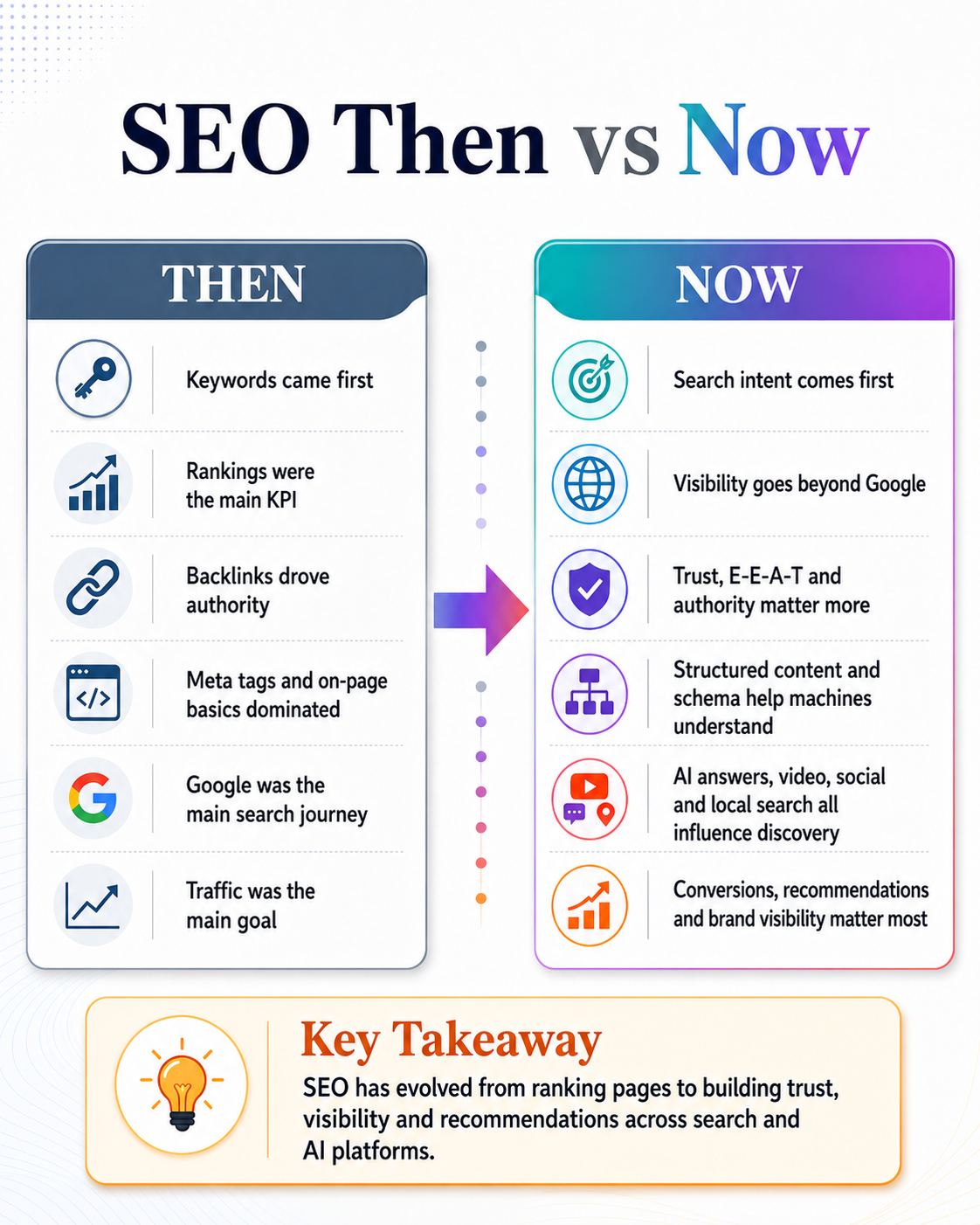
Let’s examine the global evolution from traditional SEO practices to modern approaches driven by AI and user behaviour. Where the focus was once on keywords, it has now shifted to intent and delivering comprehensive answers. Ranking reports, previously the primary KPI, now incorporate visibility across a spectrum of AI tools and platforms.
Blogs that once drove traffic now need to establish authority and trust. Backlinks, formerly the main signal of authority, are now just one piece of the credibility puzzle, complemented by brand mentions, reviews, and citations.
Then | Now |
|---|---|
Focused on Keywords | Focused on Intent and Answers |
Ranking Reports | Visibility on AI Platforms |
Traffic-Driven Blogs | Authority-Building Content |
Backlinks as Signals | Brand Mentions and Proof |
Navigating the Future of SEO Globally
To thrive in the current SEO landscape, brands must develop strategies that extend beyond traditional methods. This involves optimising content for AI engines and structuring data for efficient AI summarisation. Establishing a strong brand presence across various digital platforms is essential for global success.
The key to future triumphs lies in offering unique insights or data not usually found in AI training sets. Companies that embrace these strategies will lead the next phase of digital marketing. For further guidance, explore our AI Search Optimisation guide and comprehensive SEO resources for adapting to this changing environment.
Next Steps in Your Global SEO Journey
Staying ahead in the SEO game requires crafting content that aligns with global search intent while building robust brand trust. Developing an SEO strategy that incorporates AI technology and adapts to the fast-evolving digital landscape is vital. Visit our SEO page for more resources on optimising your business for AI-driven platforms.
Frequently Asked Questions
AI has shifted the focus from keywords to search intent, requiring content to be helpful and structured for both human and AI understanding.
SEO now prioritises brand trust, AI recommendations, and structured content that aligns with user intent.
Search intent ensures that content meets user needs more effectively, which is crucial as AI models like BERT and RankBrain evolve.
Brand mentions, reviews, and citations contribute significantly to a brand’s authority and trustworthiness in the eyes of AI systems.
Brands should focus on producing content that offers information gain and structuring data for AI summary efficiency.
Sources & Further Reading
#SEO #AI #DigitalMarketing