
Share this article

Table of Contents

The Complete Guide to Wildlife Photography: Techniques and Essential Gear

The Complete Guide to Wildlife Photography: Techniques and Essential Gear

Key Takeaways

  • Understanding animal behaviour is essential for capturing dynamic wildlife images.
  • Selecting the right gear is crucial for capturing Australia’s unique wildlife.
  • Post-processing enhances image quality while maintaining ethical integrity.
  • Ethical photography practices preserve natural habitats and behaviours.

Key Answer

Mastering wildlife photography involves understanding animal behaviour and utilizing the right gear to capture stunning images, particularly when focusing on the diverse wildlife in Australia.

Wildlife photography is a captivating yet challenging endeavour, especially within the rich landscapes and unique biodiversity of Australia. “The Complete Guide to Wildlife Photography: Techniques and Essential Gear” aims to equip photographers with not only the technical prowess required but also the biological insight necessary to capture stunning images.

Understanding Wildlife Behaviour: The Key to Successful Shots

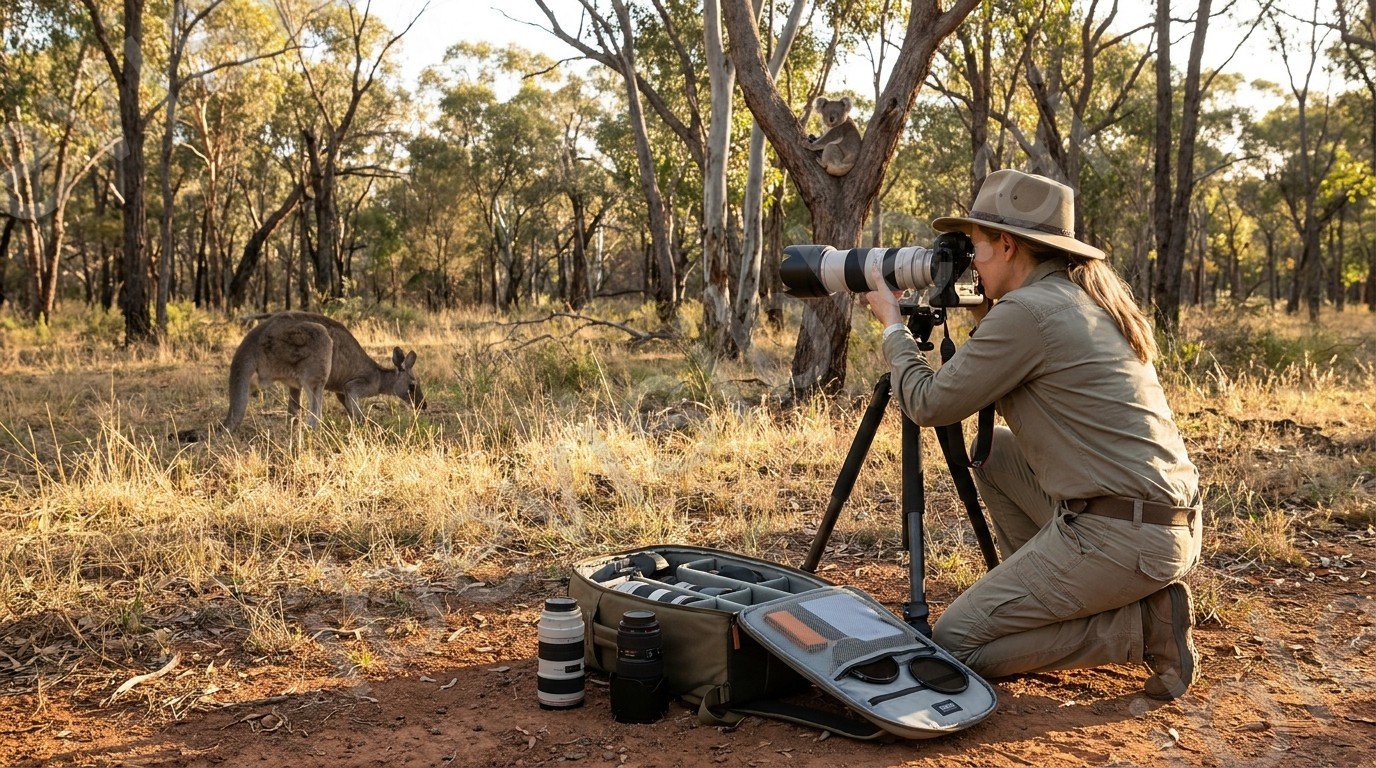
To truly excel in wildlife photography, one must prioritise understanding animal behaviour. This behavioural insight allows photographers to anticipate movements, capturing dynamic action shots rather than static portraits. In Australia, observing local species like kangaroos or koalas provides unique opportunities. Noticing the subtle cues in their body language can indicate when a kangaroo is about to jump or a koala is preparing to climb. This knowledge enables photographers to set up their shots in advance, ensuring they do not miss the perfect moment.

Essential Gear for Capturing Australian Wildlife

The technical side of wildlife photography begins with selecting the right gear. For Australian wildlife, a combination of durability, speed, and high-quality optics is crucial. DSLRs or mirrorless cameras with fast continuous shooting capabilities, such as those from Canon or Nikon, are highly recommended. Lenses should have a focal length of at least 300mm to capture distant subjects without disturbing them.

In terms of specific equipment, the Canon EOS 90D paired with a 100-400mm lens or the Nikon Z6 II with a similar range lens are excellent choices for both beginners and seasoned photographers. These setups offer the necessary range and speed to capture fast-moving animals while maintaining image quality. Additionally, bridge cameras like the Sony RX10 IV can be a budget-friendly alternative, offering impressive zoom capabilities.

Camera Lens Advantages
Canon EOS 90D 100-400mm Versatile, high resolution, fast shooting
Nikon Z6 II 100-400mm Full-frame, excellent low-light performance
Sony RX10 IV Integrated zoom Budget-friendly, all-in-one solution

Expert Perspective

Wildlife Photography Expert

In Australia, where the wildlife is both diverse and often elusive, mastering the art of stealth and ethical practices in photography is not just a skill but a necessity. The country’s stunning yet fragile ecosystems demand a respectful approach from photographers. By emphasising both behavioural understanding and ethical shooting practices, photographers can capture truly spectacular images while ensuring the preservation of the natural world they so admire.

The Digital Darkroom: Post-Processing Essentials

In the age of digital photography, post-processing is as crucial as capturing the image itself. The ‘Digital Darkroom’ involves using software tools to enhance images, with a focus on AI-denoising for low-light conditions common in wildlife photography. Adobe Lightroom and Capture One are popular choices, offering powerful editing capabilities to adjust exposure, contrast, and sharpness.

Moreover, ethical considerations during post-processing are paramount. While enhancing images, photographers must refrain from manipulating scenes in a way that misrepresents reality. This includes avoiding the removal of natural elements or adding artificial aspects that were not present at the time of shooting.

Ethical Wildlife Photography: Respecting Nature

Ethical considerations are essential to wildlife photography, particularly in a diverse ecosystem like Australia. Photographers must adopt a ‘Leave No Trace’ approach, ensuring that they do not disturb wildlife or habitats during their sessions. The use of baiting to lure animals into shots is highly discouraged, as it can disrupt natural behaviours and ecology.

Additionally, proper use of camouflage and blinds is encouraged to minimise human presence, allowing photographers to get closer to wildlife without causing stress. Australian regulations also emphasize the importance of maintaining distance from wildlife to ensure both photographer and animal safety.

Innovative Camouflage Techniques for Close-Up Shots

One of the more advanced skills in wildlife photography is mastering camouflage techniques. Using hides or vehicle-based blinds allows photographers to remain unnoticed while capturing intimate moments. In Australia, camo attire or ghillie suits can be particularly effective in the bush or near water sources, where animals frequently visit.

For those preferring a mobile approach, a vehicle can serve as a blind, providing a stable platform for shooting without alerting wildlife. This technique is especially useful in places like Kangaroo Island, where the unique fauna are more accustomed to vehicles than humans on foot.

Frequently Asked Questions

For beginners, the Sony RX10 IV is a great choice due to its excellent zoom capabilities and affordability.

Follow a ‘Leave No Trace’ ethic, avoid baiting animals, and maintain a respectful distance to ensure both safety and minimal disturbance.

Essential gear includes a camera with fast continuous shooting, a telephoto lens of at least 300mm, and durable storage solutions.

Post-processing enhances image quality, especially in low-light conditions, allowing photographers to adjust exposure, contrast, and sharpness effectively.

Study local wildlife, observe their movements, and learn cues that indicate specific actions like flight or feeding.